
The numbers are in, and they are staggering. Following the MiCA enforcement deadline on 1 July, Binance has reported that 70% of European withdrawal volume has flowed directly into self-custody wallets. Not to other exchanges. Not to new custodial platforms. Straight into wallets that users control themselves.
This is not a blip. This is a structural migration. And it is exactly what on-chain gaming was designed for.
TL;DR
- 70% of Binance EU withdrawals post-MiCA are going to self-custody wallets, not other exchanges
- Regulatory pressure is accidentally creating the perfect user base for permissionless on-chain gaming
- Self-custody users already understand wallets, signing transactions, and managing private keys
- Satoshie’s architecture requires zero custody handover: connect wallet, play, collect winnings
- The trust-based custodial model is dying in Europe, and on-chain gaming never relied on it
MiCA Did What Years of Advocacy Could Not
For years, the self-custody movement preached the gospel of “not your keys, not your coins.” It worked on a fraction of the crypto population. The rest stayed on exchanges because convenience won every time.
Then MiCA happened.
When the European Union’s Markets in Crypto-Assets regulation hit its enforcement deadline, exchanges that could not meet the new licensing requirements lost access to European markets overnight. Binance, the world’s largest exchange, was already locked out of the EU entirely after failing the “fit and proper” test. Smaller platforms folded or restricted services. Users had a simple choice: find a compliant exchange or take custody of their own assets.
Seventy percent chose self-custody. That is not ideology. That is pragmatism at continental scale.
Self-Custody Users Are On-Chain Gaming’s Perfect Audience
Here is what most people in the crypto gaming space have not yet grasped: self-custody users are not beginners. They understand wallet connections. They know how to sign transactions. They manage their own private keys. They have already cleared every UX hurdle that supposedly makes on-chain gaming “too hard” for mainstream adoption.
These are not people who need a custodial wrapper to interact with a blockchain. They are people who have explicitly rejected custodial wrappers. And now there are millions of them, concentrated in one of the world’s wealthiest markets.
On-chain gaming does not need to convince these users to set up a wallet. They already have one. It does not need to explain gas fees or transaction signing. They already understand. The only thing on-chain gaming needs to do is be worth playing.
The Custodial Gaming Model Just Lost Its Biggest Market
Most crypto gaming platforms still operate on a custodial model. You deposit funds into the platform’s wallet. The platform runs the game on its servers. If you win, the platform decides when and how to pay you out. Your funds sit in someone else’s control for the duration.
This model was already problematic. AscendEX shut down last week with no assurance users would ever see their funds again. FTX creditors are still fighting for pennies on the dollar three years later. The custodial model is a solved problem, and the solution is to stop using it.
Now, with MiCA pushing millions of Europeans into self-custody, the custodial gaming platforms face a structural mismatch. Their target users have explicitly moved away from custody. Asking those users to hand their crypto back to a gaming platform defeats the entire point of the migration they just completed.
How Satoshie Fits This Moment
Satoshie was built for self-custody from day one. The architecture is simple: connect your wallet, enter a raffle or coinflip, and Chainlink VRF determines the outcome on-chain. Your funds move directly from your wallet to the smart contract and back. No deposits. No withdrawals. No custody handover at any point.
This is not a feature we bolted on to chase a trend. This is how the platform works at a fundamental level. Every game outcome is verifiable on the blockchain. Every transaction is visible. The smart contract has no admin keys, no pause function, no ability for anyone to freeze or redirect funds.
For the 70% of European crypto users who just chose self-custody, Satoshie is one of the few gaming platforms that does not ask them to give it up.
The Regulatory Tailwind Nobody Expected
There is a beautiful irony in what is happening. MiCA was designed to bring order to crypto markets by imposing licensing requirements on centralised service providers. Its unintended consequence is pushing users toward the very architecture that makes centralised intermediaries unnecessary.
Self-custody is not just a wallet preference. It is a signal. It says: I do not trust platforms to hold my assets. I want direct control. I want transparency. I want to verify, not trust.
That is the exact value proposition of provably fair on-chain gaming. Every raffle drawn by Chainlink VRF. Every coinflip settled by a smart contract. Every result verifiable by anyone with a block explorer. No trust required at any point in the chain.
The regulation that was supposed to make crypto more institutional has accidentally created the largest self-custody user base in history. And on-chain gaming, the sector that never needed custody in the first place, is positioned to benefit more than anyone.
What Comes Next
The self-custody migration is not going to reverse. Once users take control of their own keys, the friction of going back to a custodial platform feels like a downgrade. The UX gap that used to favour exchanges is closing rapidly, and the trust gap that favours self-custody is widening with every exchange collapse, regulatory crackdown, and frozen wallet.
On-chain gaming does not need to compete with custodial platforms on convenience. It needs to be the best thing self-custody users can do with their wallets beyond holding and swapping. Raffles, coinflips, provably fair games where the outcome is determined by VRF and settled by smart contracts.
Europe just voted with its wallets. Seventy percent chose sovereignty. On-chain gaming was the only sector that never asked them to give it up.
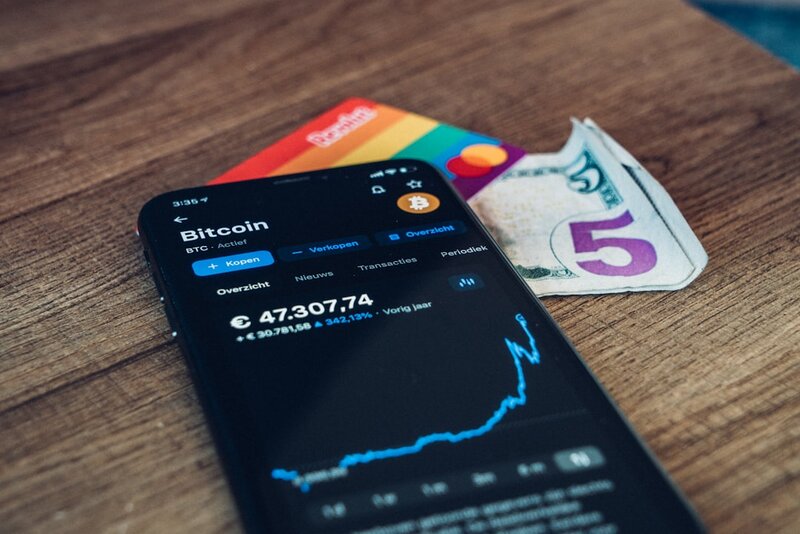
Photo by CardMapr.nl on Unsplash