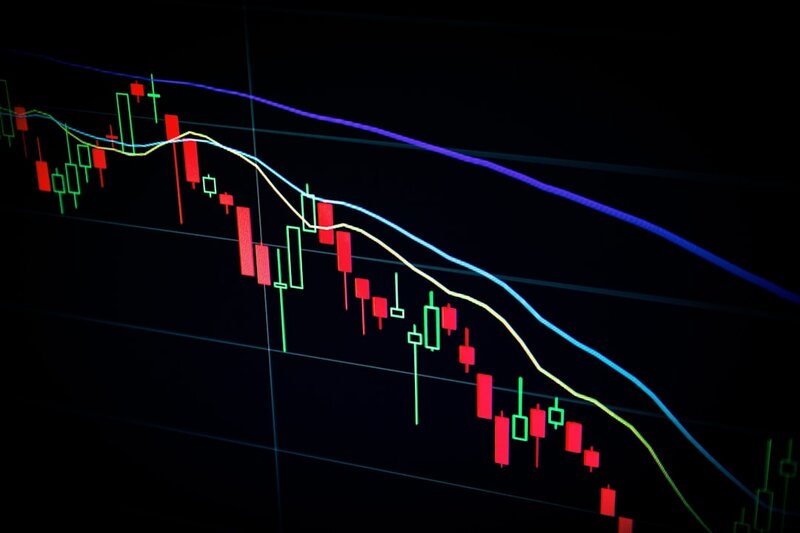

The Coinbase Premium has been negative for 50 consecutive days. Fifty. That is not a blip. That is not a bad week. That is nearly two months of American institutional buyers consistently paying less for Bitcoin than the rest of the world.
And if you are building on-chain gaming, you should not care at all.
TL;DR
- The Coinbase Premium has been negative for 50 straight days, the longest streak ever recorded, signalling sustained US institutional retreat from crypto
- Bitcoin is stuck below $63K after a third consecutive quarterly loss, the worst losing streak since the 2022 bear market
- Oil price spikes from renewed US-Iran tensions are reviving inflation fears and crushing risk appetite
- On-chain gaming does not depend on institutional capital flows, ETF demand, or US buyer sentiment
- Provably fair games settle on-chain regardless of who is buying or selling Bitcoin on Coinbase
What the Coinbase Premium Actually Tells You
For the uninitiated, the Coinbase Premium is the price difference between Bitcoin on Coinbase (where US institutions trade) and global exchanges like Binance. When it is positive, American buyers are paying a premium. When it is negative, they are not.
A negative premium for a day or a week means nothing. Markets fluctuate. But 50 consecutive days of negative premium tells a very specific story: the smart money in the United States has been a net seller of crypto for almost two months straight.
This is not speculation. This is on-chain, verifiable data. And it lines up perfectly with everything else happening in macro: Bitcoin ETFs logged their largest quarterly outflow since launch, digital assets posted a third consecutive quarter of losses, and institutional capital has been rotating aggressively into AI equities since the start of the year.
The Institutional Narrative Was Always Fragile
Remember when the Bitcoin ETF launch was supposed to change everything? When BlackRock filing meant crypto had finally been legitimised? When the narrative was that institutional inflows would create a permanent floor under prices?
That floor lasted about as long as it took for something shinier to come along.
The reality is that institutional capital is mercenary. It goes where returns are. Right now, returns are in AI. Tomorrow, they will be somewhere else. The institutions that bought Bitcoin ETFs were never buying into a philosophy. They were making a trade. And trades get unwound.
This is not a criticism. It is simply how institutional money works. The problem is that an entire ecosystem built its narrative around the assumption that institutional adoption was permanent and directional. It was neither.
On-Chain Gaming Never Needed a Bid from Goldman Sachs
Here is what the Coinbase Premium has to do with on-chain gaming: absolutely nothing.
A provably fair coinflip on Satoshie settles in exactly the same way whether the Coinbase Premium is +5% or -5%. The Chainlink VRF call that generates the random number does not check the ETF flow data first. The smart contract that pays the winner does not wait for institutional sentiment to improve.
This is not resilience through stubbornness. It is resilience through architecture. On-chain gaming does not depend on:
- Institutional capital flows — there is no treasury, no AUM, no quarterly report
- Exchange liquidity — games settle on-chain, not through order books
- US buyer sentiment — permissionless means permissionless, regardless of geography
- ETF wrapper demand — the games exist on the blockchain, not inside a fund structure
The entire premise of on-chain gaming is that it removes the intermediary layer where institutional sentiment lives. When Goldman Sachs dumps its Solana ETF position, that is an intermediary problem. When BlackRock rebrands its Bitcoin fund, that is an intermediary problem. On-chain gaming has no intermediary.
The Bear Market Is the Feature, Not the Bug
Fifty days of negative Coinbase Premium means the market is in sustained pain. Bitcoin below $63K with oil spiking and Iran tensions escalating is not a comfortable environment for risk assets.
But consider what has not happened during those 50 days:
- No on-chain game has paused because of market conditions
- No VRF call has failed because of ETF outflows
- No smart contract has changed its rules because of inflation data
- No provably fair outcome has been altered because of geopolitical risk
Every single on-chain game that was running 50 days ago is still running today, on the same terms, with the same provable fairness guarantees. The code does not read Bloomberg.
This is not something you can say about most crypto projects. Exchanges cut staff. Protocols pause withdrawals. DAOs vote to change tokenomics. Gaming guilds pivot to selling user data. The sustained bear market exposes every project that was held together by sentiment rather than architecture.
The Real Stress Test Is Duration, Not Depth
A flash crash tests your liquidation engine. A sustained downturn tests your reason to exist.
The crypto gaming projects that launched with million-dollar prize pools and custom Layer 2 chains and pre-sale token mechanics are finding out what happens when the music stops playing for months, not minutes. Token prices collapse. Player counts crater. VCs stop returning calls. And suddenly the project that raised $50 million needs the market to recover just to justify its own infrastructure costs.
Provably fair on-chain gaming has no infrastructure costs that scale with market sentiment. A Satoshie raffle costs the same gas to execute at $60K Bitcoin as it does at $100K Bitcoin. The smart contract does not have a burn rate. It does not need a Series B. It does not need the Coinbase Premium to go positive.
This is what it means to be architecturally sound. Not just surviving a crash, but being genuinely indifferent to whether one happens.
Fifty Days Is Just the Beginning
If the inflation print on July 14 comes in hot, the negative premium streak could extend well into the autumn. If the Fed stays hawkish at the end of this month, institutional retreat could accelerate. If AI continues to outperform, the rotation out of crypto could deepen further.
None of this matters to a coinflip that settles in the next block.
The Coinbase Premium will go positive again eventually. Markets cycle. Institutions will return when the risk-reward shifts. And when they do, the narrative machine will fire up again, declaring crypto permanently legitimised for the third or fourth time.
On-chain gaming will be exactly where it has always been: on-chain, provably fair, and completely indifferent to which way the premium is pointing.
That is not a limitation. That is the entire point.
📷 Photo by Maxim Hopman on Unsplash