
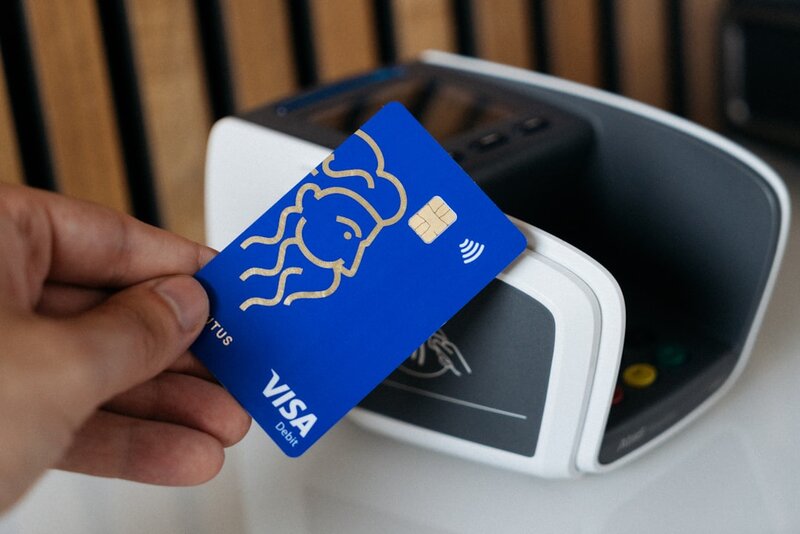

Visa just launched a stablecoin platform. Not a pilot. Not a proof of concept. A production platform that lets 15,000 financial institutions and over 200 million merchants mint, move, and manage stablecoins through the same Visa infrastructure they already use to settle $15 trillion in payments every year.
Read that again. The largest payment network on Earth just made stablecoins a native feature of the global financial system. And if you are building on-chain games in 2026, this changes everything.
TL;DR
- Visa launched its Stablecoin Platform (VSP) on 16 July 2026, letting banks and fintechs mint, transfer, and manage stablecoins through existing Visa infrastructure
- The platform reaches 15,000 financial institutions and over 200 million merchants globally, starting with Open USD
- On-chain gaming’s biggest adoption barrier has always been the payment rail — users needing to “onboard to crypto” before they can play
- With stablecoins embedded in mainstream banking, the friction between fiat and on-chain gaming effectively vanishes
- Platforms like Satoshie, built on Base with Chainlink VRF, are architecturally ready for this wave — no changes needed
The Payment Rail Problem Was Always the Real Barrier
Every crypto gaming project has a version of the same excuse: “Users don’t want to deal with wallets and tokens, so we have to abstract the blockchain away.” It has been the go-to justification for building games that call themselves on-chain but run their outcomes on private servers. Can’t expect mainstream users to navigate MetaMask, right?
That excuse was always a bit thin. But after yesterday, it’s dead.
Visa’s Stablecoin Platform doesn’t ask users to learn crypto. It doesn’t require them to install a wallet extension or bridge tokens across chains. It lets their bank — the institution they already trust with their salary, their mortgage, and their direct debits — handle stablecoins natively. Your bank mints the stablecoin. Your bank moves it. Your bank settles it. On-chain, through Visa’s existing rails.
The friction argument just evaporated.
What VSP Actually Does
The Visa Stablecoin Platform is not a consumer product. It’s infrastructure. Banks and fintechs plug into it to issue stablecoins, transfer them across blockchain networks, and manage reserves — all through a single platform that integrates with their existing Visa payment and treasury workflows.
The first stablecoin supported is Open USD, issued by an industry consortium called Open Standard. But the architecture is designed to support multiple stablecoins from multiple issuers, which means the platform will grow as more institutions start minting their own digital dollars.
What matters for on-chain gaming is the scale. Visa settles roughly $15 trillion annually. It already processes several billion in stablecoin settlements. The VSP is designed to multiply that by making stablecoins as easy to use as any other Visa payment instrument.
When stablecoins are a native feature of the banking system, the “crypto onboarding” step in on-chain gaming disappears. A user with a Visa-connected bank account is already one step from an on-chain transaction.
The Crypto Gaming Industry Should Be Embarrassed
Here is what’s remarkable about Visa’s announcement. The world’s largest payment network looked at blockchain infrastructure and said: “This is production-ready. We are building on it.” They didn’t hedge. They didn’t call it experimental. They built a platform and started onboarding banks.
Meanwhile, the crypto gaming industry — the sector that was supposed to be blockchain-native from birth — is still building games where outcomes happen on private servers, results are unverifiable, and the blockchain is used exclusively as a payment rail for token sales.
Visa trusts blockchain enough to settle trillions through it. Crypto gaming doesn’t trust blockchain enough to run a coin toss on it.
The irony should sting.
What This Means for On-Chain Gaming
Visa’s move validates the infrastructure layer that on-chain gaming is built on. Base, Ethereum, stablecoins, smart contracts — these aren’t experimental any more. They’re the same rails that the world’s largest payment processor just adopted.
For platforms like Satoshie, this is pure tailwind. Satoshie runs on Base, uses Chainlink VRF for provably fair randomness, and settles every game outcome on-chain. The architecture doesn’t need to change to accommodate a world where stablecoins are mainstream. It was built for it.
The real question is what happens to crypto gaming projects that built their entire thesis around abstracting away the blockchain. If Visa just made stablecoins as natural as a card payment, and users become comfortable with on-chain transactions through their existing banks, then hiding the blockchain isn’t a feature. It’s a liability. Because users will start asking: “If my bank runs on-chain, why can’t my game prove its outcomes on-chain too?”
The Convergence Is Happening Whether Gaming Is Ready or Not
There’s a pattern forming. Nasdaq put its order book on-chain. The six biggest US banks launched tokenised deposits on Ethereum. Japan’s megabanks are building a joint yen stablecoin. And now Visa has made stablecoins a native feature of its $15 trillion settlement network.
Traditional finance is moving to the exact same infrastructure that on-chain gaming uses. The gap between “mainstream” and “crypto” is closing from the mainstream side.
This is the best possible news for on-chain gaming platforms that actually use the blockchain for what it’s good at: transparency, verifiability, and trustless execution. And it’s the worst possible news for crypto gaming projects that use blockchain as a marketing label while running everything that matters on a private server.
When your users’ banks are on-chain, they’ll expect their games to be too. Not just for payments. For outcomes. For fairness. For proof.
The Standard Just Moved
Visa didn’t ask permission to build this. They didn’t wait for regulatory clarity. They looked at the infrastructure, judged it production-ready, and deployed. That’s the signal.
If the world’s largest payment network is comfortable settling trillions on-chain, then every crypto game that refuses to verify its outcomes on-chain is making a choice. And it’s not a technical limitation. It’s a trust deficit — the platform doesn’t want you to see how the game actually works.
On-chain gaming was built for the world Visa just accelerated. Provably fair. Fully verifiable. No private servers. No hidden RNG. Just smart contracts, VRF, and a receipt for every outcome.
The payment rail excuse is gone. Now we find out who was actually building for transparency, and who was just using the word.
📷 Photo by CardMapr.nl on Unsplash