
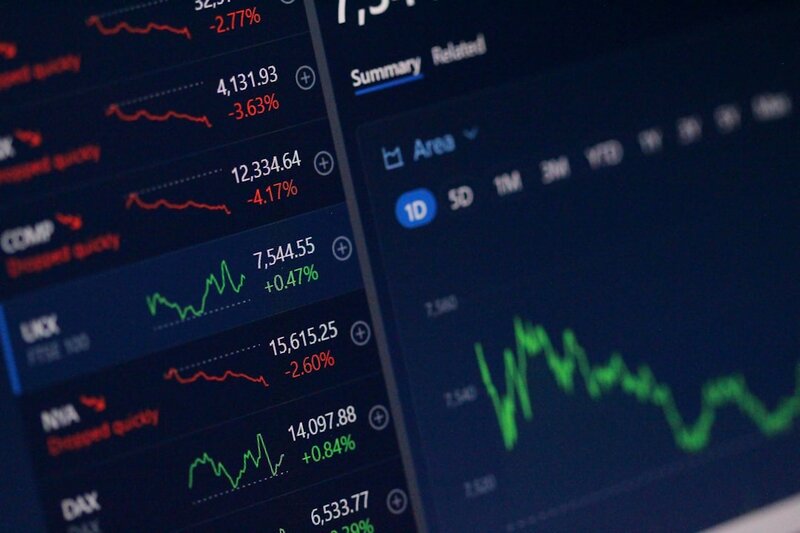

Bitcoin and Ethereum ETFs added roughly $23 billion last week, their strongest week since October. Only about $2.6 billion of that was new money. The other $20 billion or so was the same coins, already held by the same people, being marked at a higher price.
Nothing happened. The number went up.
That is not a scandal. It is arithmetic, and Decrypt did the honest thing by splitting it out. But it is the cleanest illustration this year of a problem that runs straight through crypto gaming: a metric can grow for a reason that has nothing to do with what the metric is implicitly claiming.
TL;DR
- Bitcoin and Ethereum ETFs grew about $23 billion last week, but only around $2.6 billion of that was fresh inflow. The rest was revaluation of coins investors already owned.
- Assets under management is a mark. Net flow is an event. They are different numbers and only one of them tells you whether anybody turned up.
- Crypto gaming publishes the same shape of number, denominated in a volatile asset, with no split: prize pool size, total paid out, treasury value, TVL.
- Every one of those grows in a bull market with zero new players, zero new games and zero improvement in fairness, then shrinks in a drawdown without a single withdrawal.
- A Chainlink VRF proof for the draw you entered is denominated in nothing. It is a boolean about one event, and it says the same thing at $80,000 Bitcoin as it did at $20,000.
A mark is not an event
Two numbers are involved here and they are constantly conflated. Assets under management is a mark: quantity multiplied by whatever the last print was. Net flow is an event: somebody sent money in or took it out at a specific time. AUM moves when either the quantity or the price moves. Flow moves only when a person does something.
Report AUM growth on its own and you have written a headline about demand out of a fact about price. Last week the price of the underlying went up while Bitcoin punched through $80,000, so the mark on every existing share went up with it. Roughly 11% of the increase was people choosing to be there who were not there before. The other 89% was the market repricing a decision made months ago.
Credit where it is due: we can only have this conversation because ETF flows are reported separately from AUM, daily, by issuers obliged to publish them. The decomposition exists and somebody bothered to run it. That is the entire reason the story reads as “only $2.6 billion was new money” rather than “record week, up and to the right”.
Crypto gaming publishes the mark and never the flow
Now go and look at the front page of any crypto casino. You will find a big number, usually animated, usually denominated in ETH or SOL or a house token. Total value locked. Total paid out. Current prize pool. Treasury size. Sometimes a live counter ticking upwards, which is the purest version of the trick because the ticking implies activity.
Not one of those platforms publishes the split. There is no “of which, price appreciation” line. There is no net flow figure. There is nothing that separates “more people are playing here” from “the token we denominate our vanity metric in went up 40% this quarter”.
The implication is always participation. The mechanism is frequently just the market. An operator whose player count flatlined for six months can still post a total-value-locked chart that goes up and to the right through a rally, and every word of it will be true: growth-shaped, honest, and completely uninformative about whether anyone is choosing to be there.
The reverse is uglier and nobody plans for it. Your advertised $5 million prize pool is not $5 million. It is a quantity of a volatile asset that was worth $5 million when the marketing was written. A 40% drawdown halves it without a single withdrawal, without a single game resolving, and without anybody doing anything wrong. If the prize was advertised in dollars and pays in tokens, someone is short a promise they never hedged, and the players find out at the worst possible moment.
Per-outcome proof does not have this failure mode
Here is the structural point, and it is why we push verification down to the level of the individual game rather than up to the level of the platform.
A Chainlink VRF proof for the specific draw you entered is not denominated in anything. It does not appreciate. It does not need a benchmark, a window or a peer group. It answers one question about one event: was this random number produced by a source that could not be steered, and did the contract verify the proof before it decided who won. That answer is identical at $80,000 Bitcoin and at $20,000, and identical whether the platform had ten players last month or ten thousand. It does not improve in a rally or degrade in a bear market, because it was never a measurement of the market.
Aggregate metrics are the opposite. They are always relative to something unstated: a chosen window, a chosen denomination, a chosen peer set. Whoever picks the frame picks the story, and the operator picks the frame.
The part where this points back at us
Satoshie has the same exposure and it would be dishonest to pretend otherwise. If we published “X ETH paid out to players”, that figure would ride the ETH price like everybody else’s. Running on Base with everything settling on-chain does not exempt us from the arithmetic. It just means the raw rows are public, so a hostile reader can run the decomposition we failed to run.
So the commitment is narrow and it is the only one worth making. Any number we put in front of you should be denominated so you can strip the price move out, and stated over a window you can change. Better still, do not trust our number at all. Take the draw you were actually in, pull the VRF request and the fulfilment from the chain, and check that the proof was verified before the winner was picked. That is a claim about your game, not about our quarter, and it survives a hostile reader because it was never asking to be believed.
Three questions worth asking any platform
- Is that number a mark or an event? If it can move while every player is asleep, it is a mark, and it is telling you about the market rather than about the platform.
- What is it denominated in, and over what window? A figure with no denomination and no window is a mood, not a metric.
- Can I verify anything at all without that number? If the entire trust case collapses when you delete the dashboard, there was never any proof in it.
The ETF story is a good week for crypto and a better week for honest reporting. The lesson for on-chain gaming is not that big numbers lie. It is that a number which grows without anyone contributing anything was never evidence, and the fix is not a more impressive dashboard. It is a proof about one game that a stranger can check without asking us for permission.
📷 Photo by Anne Nygård on Unsplash