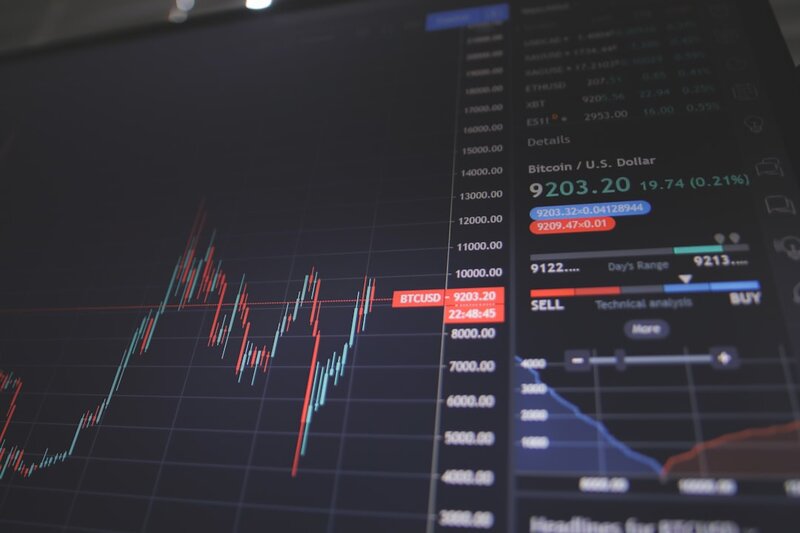

On 24 August 2026, Coinbase’s B20 tokenised equities went live on Base, priced by Chainlink feeds. Apple, Nvidia and a couple of hundred other names, tradeable around the clock by eligible non-US users, composable with the rest of DeFi. Bitwise followed within a day with self-custodied portfolios built on the same tokens. This is not a story about something breaking. Nothing broke. It is competent infrastructure shipping on the chain we settle on, using the oracle network whose randomness product we depend on.
Which is exactly why it is worth stopping on. Because it puts two very different things on the same chain, under the same brand, described by the same three words: verified on-chain. And on-chain gaming is about to spend the next two years using that phrase for both.
TL;DR
- Coinbase’s tokenised stocks launched on Base on 24 August 2026 with Chainlink price feeds supplying the prices.
- A VRF output and a price feed output are both “verified on-chain”, but they are different categories: randomness has no referent, a price does.
- A signature proves provenance and integrity. It cannot prove correspondence. Nothing on a blockchain can prove that a number matches the world.
- Checking a VRF draw needs the chain and nothing else, forever. Checking a price needs you to leave the chain, and to have done it at the time.
- As crypto casinos add price-settled and sports-settled games, they inherit a dispute class that provable fairness never covered, and the marketing word will not change.
The half nobody asks about
Take a Chainlink VRF response. A contract requests randomness, a proof comes back, the coordinator verifies that proof on-chain before the callback fires, and a number lands in your contract. Ask what would make that number wrong and you run out of road quickly. There is nothing outside the chain it is supposed to match. It is not an estimate of anything. The proof is not evidence about correctness, it is correctness, entire. The value is self-certifying.
Now take a price feed. Nodes observe markets, report, the aggregate lands on-chain, signed and traceable. Ask what would make that number wrong and the road goes on indefinitely, because the number is a claim about something that exists elsewhere. Apple traded at a price on a venue at a moment. The feed asserts what that price was. Every cryptographic guarantee in the pipeline is a guarantee about the assertion’s journey: these nodes said this, it was not altered in transit, it was combined by these published rules. None of it is a guarantee about the assertion’s truth.
Provenance is not truth. You can have perfect custody of a wrong statement.
This is not a flaw in Chainlink’s engineering, and this post is not a swipe at it. Aggregating many independent nodes across many independent sources is the best available answer to a problem that has no clean answer. It narrows disagreement, makes manipulation expensive rather than cheap, and removes the single point of failure that cost Ostium $18m when it rolled its own oracle and one signer key was compromised. What no amount of aggregation can do is convert a claim about the outside world into a number that certifies itself. That is not an engineering gap waiting on a better version. It is a category boundary.
The asymmetry that matters is in the checking
Here is the part that has consequences for gaming, and it is not the accuracy question. It is the verification question.
To check a VRF draw, you need the chain and nothing else. Pull the request, pull the fulfilment, verify the proof yourself. You can do it tonight, you can do it in four years, you can do it having never opened the app, and you can do it while hostile to everyone involved. The check is closed. It never expires, because everything it depends on is still sitting there.
To check a price-settled outcome, you have to leave the chain. You need a source of truth about the world, that source is not verifiable on-chain either, and crucially you largely needed to do it at the time. The market state you would compare against does not persist in a form a stranger can re-derive. Six months later, the honest answer to “was that settlement price right?” is usually “it looked plausible and nobody objected loudly enough”.
Verification of a value with a referent is neither closed nor retroactive. That is the property being quietly traded away, and it is worth more than the accuracy debate people have instead.
What this does to a casino
Crypto gaming is migrating hard toward outcomes with referents. Sports books. Will-BTC-close-above-X. Prediction markets. Parlays on tokenised equities, now that tokenised equities are sitting there on Base being composable. Every one of those products swaps the single input class that can be proven end to end for a class that structurally cannot be. And the marketing line will not change by one word. Expect “provably fair, powered by Chainlink” on products where the proof covers the transport and not the claim.
The concrete cost is the dispute class. A VRF dispute is not a hard dispute to resolve, it is an impossible one to have: re-verify the proof, done, there is nothing to argue about. A price dispute is arguable by construction. Which venue. Which timestamp, to what precision. What happens when the underlying is halted, when a wick prints on thin liquidity, when a round goes stale, when the feed’s honest failure mode kicks in and it simply stops updating.
Every one of those has to be answered by a human-written rule, and every rule needs someone to apply it. That is discretion, and as this series has said before: discretion has no direction. The mechanism that voids your unfair loss on a bad print is the same mechanism that voids your win. It is not in the proof, and it never was.
Where Satoshie actually stands
Our escrow, VRF resolution and payout happen in one transaction, with no admin key, no clawback and no settlement step to interfere with. That is genuinely closed, and I want to be precise about why: it is closed because our games have no referent. A raffle and a coinflip are self-contained. There is no outside fact for the contract to be wrong about. That is scope, not virtue, and it would be dishonest to bank it as a moat.
The day we ship a game whose outcome depends on a fact the chain cannot generate, we inherit all of this, and we do not get to keep the word. So the commitment is narrow and checkable: nothing gets called provably fair when its result depends on something off-chain. If we ever ship a referent-bearing game, it gets labelled as oracle-settled, the feed gets named, the halt and staleness rules get published before you can bet, and we state plainly which half is proven and which half is trusted.
This series keeps landing on the same correction, and it applies to us as much as anyone: the honest pitch is narrower than the marketing one, and it is stronger for it. Provable fairness kills exactly one dispute class. It does not prove solvency. It does not prove the front end matches the contract. It does not prove who holds the winning key. And it cannot prove that a number describing the world is the right number.
Three questions
Before you accept “verified on-chain” from anyone, including us:
- Does this outcome have a referent? If the result depends on a fact that exists somewhere other than the chain, the proof stops at the oracle’s doorstep.
- Who wrote the rule for when the feed and reality disagree, and can I read it before I commit funds rather than after I lose them?
- Can I verify this using only the chain? If checking requires the outside world back, then whatever you have, it is not a proof. It is a well-signed opinion.
Coinbase putting Apple on Base is good news. It is also the clearest illustration yet that “on-chain” describes where a number lives, not where it came from.
📷 Photo by Nick Chong on Unsplash