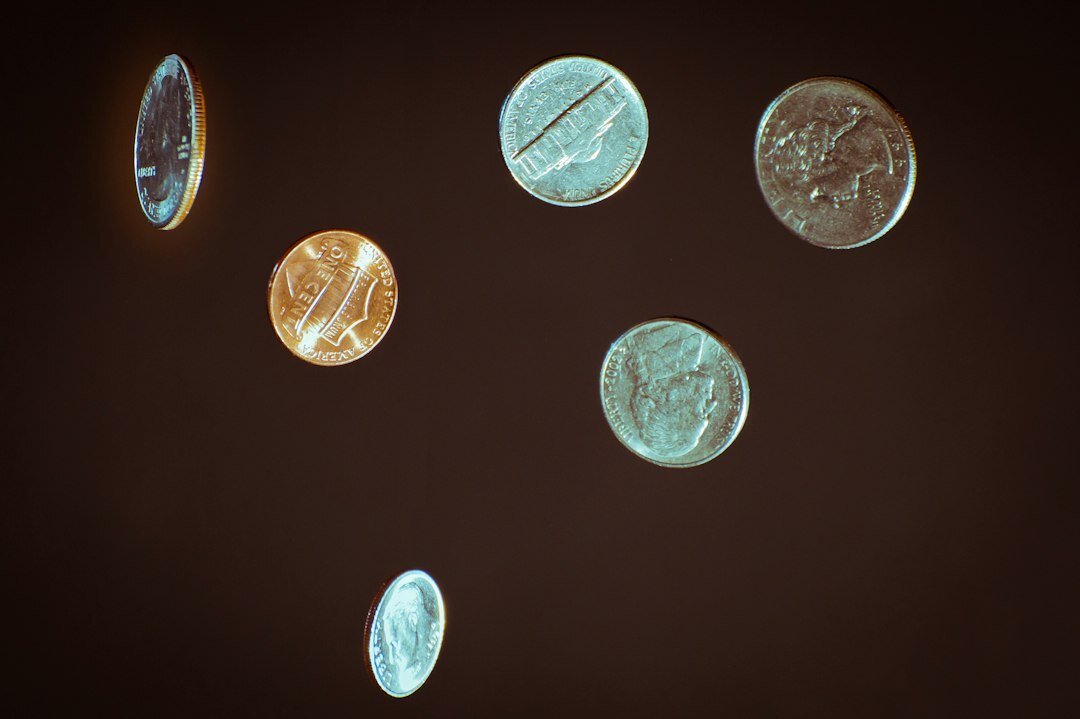

On Saturday, CoinDesk’s State of Crypto newsletter ran a headline asking whether the Digital Asset Market Clarity Act is dead. The standfirst underneath it read, in full: “I dunno, flip a coin.”
The section heading was “Really hard to say.” A companion piece the same week described the bill as a Schrödinger’s cat in life-death limbo. So within about forty-eight hours of a cloture vote, crypto’s paper of record reached for two of the most precisely specified objects in probability and physics, and used both of them to mean “nobody has a clue.”
Nikhilesh De’s piece is honest about what it is. It says outright that it will be “informed by vibes,” which is more candour than most crypto analysis manages, and the reporting under it is solid: a new draft, the ethics question unresolved, not sixty votes as of Friday afternoon, negotiations running through the weekend, seven weeks to a midterm. No complaint about any of that. The complaint is with the metaphor, because that metaphor is the single most load-bearing word in the industry we work in, and it is being used to mean the exact opposite of what it means in a contract.
TL;DR
- “Flip a coin” is used to mean “I have no information.” A coin flip in a smart contract means the opposite: the information is complete and published before anyone commits money.
- Those are two different kinds of not-knowing. One is ignorance about a fact that already exists (the Senate whip count). The other is a distribution fixed in advance over an outcome that does not exist yet (a Chainlink VRF word).
- The metaphor also smuggles in a number. A coin flip is not “unknown,” it is 50/50, and CoinDesk’s own reporting says the odds are nothing like even.
- Every rigged game is unpredictable to the player. Unpredictability is a property of your information; fairness is a property of the mechanism. “It’s random” is not a defence, it is what you would say either way.
- The only useful test: can you state the distribution? If yes, it is a mechanism you can check. If no, “coin flip” is a shrug wearing a number it has not earned.
Two different kinds of not knowing
There is a fact of the matter about Tuesday’s cloture vote. It exists right now. Every senator knows roughly how they intend to vote, the whips have counts, and the leadership has a number in its head that is either above sixty or below it. That number is real and it is being actively negotiated over. You cannot see it, but it is there.
That is ignorance, and it is a property of you, not of the world. Somebody in that building knows. The information exists and is simply not available to you, which is why the answer changes when a staffer leaks and why negotiations “through the weekend” can move it.
Now take a coin flip inside a game contract. The outcome does not exist yet. There is no fact of the matter being withheld from you, because there is nothing to withhold. The randomness has not been generated. Nobody in the building knows, because there is no building and there is no knowing. What does exist, ahead of time and in public, is the shape of the thing: the set of possible results and the probability attached to each.
Those two situations are close to opposites. In the first, the answer exists and the distribution is unknown. In the second, the distribution is known and the answer does not exist. “Flip a coin” takes the first and dresses it in the clothes of the second, and because the phrase sounds humble, nobody notices that it has actually made a fairly bold claim.
The metaphor smuggles in a number
This is the part that gets missed. “Flip a coin” is not a way of declining to give odds. It is a way of giving odds while sounding like you are not.
A coin flip means fifty-fifty. That is the entire content of the metaphor. And CoinDesk’s own reporting, in the same newsletter, directly contradicts it: there are not sixty votes, the sticking point is ethics rather than anything technical, the vote lands seven weeks before an election when nobody wants to co-operate across the aisle, and industry participants “seem pessimistic that the bill will advance.” That is not even money. That is a lopsided book, and the piece knows it.
So the metaphor is less accurate than the journalism sitting directly above it. It rounds an unknown, skewed distribution up to the most flattering symmetric one available. Fifty-fifty is the costume uncertainty puts on when nobody wants to commit to a number, and it is a generous costume, because it quietly upgrades “probably not” into “could go either way.”
Worth noticing who benefits from that upgrade. It is not the reader.
Unpredictable is not the same as fair
Here is why any of this matters to anyone building games rather than reading policy newsletters.
Every rigged game is unpredictable to the player. That is not a bug in the rigging, it is the entire point of it. A weighted roulette wheel produces outcomes you cannot call in advance. A slot machine with an undisclosed extra few percent shaved off the return is precisely as surprising, spin to spin, as an honest one. A shuffle seeded by a server you cannot inspect feels exactly like a shuffle seeded fairly. If it did not, it would not work.
Which means your inability to predict the next result tells you nothing whatsoever about whether the game is honest. Unpredictability is a fact about your information. Fairness is a fact about the mechanism. They are separate properties, and an enormous slice of online gambling survives on the assumption that players will treat the first as evidence of the second.
This is why “it’s random” is not a defence. It is the sentence you would say either way. It is compatible with a perfectly fair game and with one that skims you on every draw, and a claim that is compatible with both outcomes carries no information at all. “Provably fair” is not a fancier synonym for “random.” It is a different and much harder claim: that the distribution was fixed in advance and that the operator cannot move it.
What a stated distribution actually looks like
On Satoshie, a coinflip resolves as randomWords[0] % 2 against a word delivered by Chainlink VRF. The coordinator verifies the cryptographic proof on-chain before the callback is allowed to run, and the payout settles in the same transaction that resolves the game. There is no window between the result existing and the money moving, because there is no window for one to exist in.
On the raffle side, ticketsMinted is readable contract state on Base. Your odds are not a promise we make in marketing copy, they are a division you can perform yourself, over a number anyone can query, before you decide whether to enter. If a hundred tickets are sold and you hold four, your probability is four percent, and that is arithmetic rather than assurance.
The claim is not that we know the future better than a policy reporter does. Obviously we do not. The claim is narrower and, we would argue, the only one worth making: the distribution was published before any money moved, in a form where being wrong about it is demonstrable by a stranger without our co-operation. We could not quietly make it 45/55 if we wanted to, and that is the property being sold, not luck.
The limits, stated plainly
A published distribution tells you the odds and never the draw. Knowing a flip is genuinely 50/50 tells you precisely nothing about whether you are going to win, and anyone implying otherwise is selling something. Provable fairness gives you the shape of the thing, not the outcome.
The distribution also includes the house’s cut. Fair and profitable-for-you are unrelated properties that people constantly confuse. Our games are honest, and over enough plays they are negative expected value for the player. Both of those sentences are true at once, and we would rather say so than let the word “fair” do work it was never meant to do.
And none of this has any bearing on whether the Clarity Act clears cloture. A VRF word has no opinion on Senate procedure, and anyone tying an on-chain gaming thesis to a legislative calendar has the dependency backwards.
One question worth asking
The next time somebody tells you an outcome is random, or a toss-up, or a coin flip, ask whether they can state the distribution.
If they can, it is a mechanism, and mechanisms can be checked. If they cannot, the honest phrasing is “I don’t know,” which is a fine and respectable thing to say. “Coin flip” is not that sentence. It is that sentence with a number attached that nobody has justified.
On Tuesday at 18:15 UTC the Senate votes and we find out. Nobody gets to verify that in advance, and that is fine, because that is what politics is. It is just worth noticing that the industry reaches for gambling metaphors whenever it hits something it cannot verify, while the gambling it actually builds has become one of the few places where the numbers are on the table before you commit.
The coin is not a shrug. It never was.
📷 Photo by Chris Briggs on Unsplash