
Arthur Hayes says Bitcoin could drop below $60K before rallying to $100K. Crypto Twitter is arguing about whether we are in a bull market, a bear market, or some new category that has not been named yet. The prediction markets are split. The analysts are hedging.
And none of it matters for on-chain gaming.
TLDR
On-chain gaming platforms like Satoshie are not correlated to crypto market direction the way trading platforms or DeFi yields are. Games work regardless of whether Bitcoin is at $60K or $100K. Provable fairness, instant settlement, and transparent mechanics are valuable in any market. Bull markets bring more users, but bear markets build better products.
The Market Correlation Myth
There is a common assumption that everything in crypto rises and falls together. When Bitcoin pumps, altcoins pump, DeFi pumps, gaming tokens pump. When Bitcoin dumps, everything dumps.
This is broadly true for speculative assets. Token prices track market sentiment because most token value is speculative. But the utility of on-chain gaming is not speculative. A provably fair raffle works exactly the same whether ETH is worth $2,000 or $20,000.
The smart contracts do not care about the market. Chainlink VRF generates the same cryptographically verified randomness in a bear market as it does in a bull market. Winners are selected by the same mathematics. Payouts settle with the same finality.
Market conditions affect who shows up to play and how much they wager. They do not affect whether the games are fair, functional, or valuable.
Gaming in Bear Markets
Bear markets are brutal for crypto projects that depend on token price appreciation, speculative interest, or continuous capital inflows. Yield farms collapse. NFT projects go silent. Exchanges lay off staff.
But gaming has a different dynamic. People play games because games are engaging, not because they expect the underlying token to appreciate 10x. The entertainment value of a well-designed raffle or coinflip does not decrease when the market turns red.
In fact, bear markets can be surprisingly good for gaming platforms for several reasons:
Reduced competition for attention. When the market is pumping, everyone is watching charts, trading memecoins, and chasing yields. When the market slows down, people look for other things to do with their crypto. Gaming fills that gap.
Gas fees drop. Bear markets typically mean less network congestion, which means lower transaction costs. Games that might have been prohibitively expensive during peak congestion become accessible.
Quality matters more. In a bull market, anything with a token pumps regardless of quality. In a bear market, only products with genuine utility retain users. This is actually healthy for platforms that have invested in building something real.
Developers build. The best crypto products were built during bear markets by teams that kept working when the hype died down. Ethereum itself was built during a bear market. So was most of DeFi.
Gaming in Bull Markets
Bull markets bring the obvious advantages: more users, higher volume, more capital flowing through the ecosystem. New people enter crypto for the first time, and some of them discover on-chain gaming.
But bull markets also bring noise. Hundreds of low-quality gaming tokens launch, make grand promises, attract speculators, and collapse. The gaming category gets polluted with projects that are really just token launches with a gaming theme stapled on.
This is where provable fairness becomes a competitive advantage. When the market is flooded with projects all claiming to be the next big thing in crypto gaming, the ones that can actually prove their fairness stand out. Verified smart contracts, Chainlink VRF integration, and transparent on-chain records are not just technical features. They are trust signals that cut through the noise.
The Traditional Gaming Benchmark
Traditional online gaming is a $300 billion industry that operates regardless of financial market conditions. People play games in recessions. They play during market crashes. They play during booms. Gaming activity correlates with leisure time and engagement, not with stock prices or crypto charts.
On-chain gaming, as it matures, will follow the same pattern. The early phase is dominated by crypto-native users whose gaming activity does correlate with market sentiment because they are primarily crypto traders who game on the side. But as the UX improves and mainstream users arrive, the player base diversifies beyond the trading-obsessed demographic.
This is the trajectory Satoshie is building toward. Not a platform for crypto traders looking for another way to speculate, but a gaming platform that happens to use blockchain for its provable fairness guarantees. The blockchain is the infrastructure, not the proposition.
Why This Matters Now
The current market uncertainty is exactly the kind of environment that separates serious projects from speculative ones. With Hayes predicting potential drops to $60K and others calling for new highs, the market is directionless. Speculation-dependent projects stall in this environment.
Gaming platforms with genuine utility do not stall. They iterate. They improve. They build the features and refine the experience that will be ready when the next wave of users arrives, regardless of which direction the market goes.
At Satoshie, the bet is straightforward: provably fair gaming has value independent of market conditions. Whether crypto is in euphoria or despair, people want games they can trust. Chainlink VRF delivers that trust. Smart contracts enforce it. The blockchain records it.
Markets go up and markets go down. Fair games are fair games.
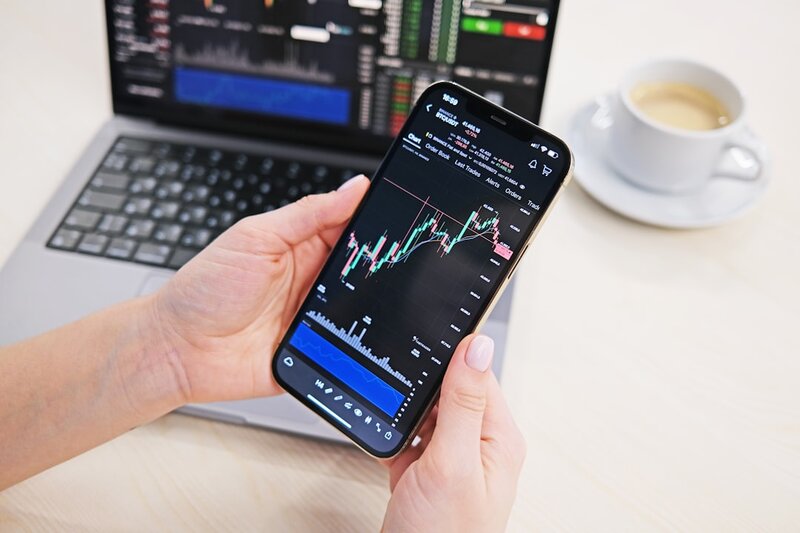
📷 Photo by TabTrader.com on Unsplash