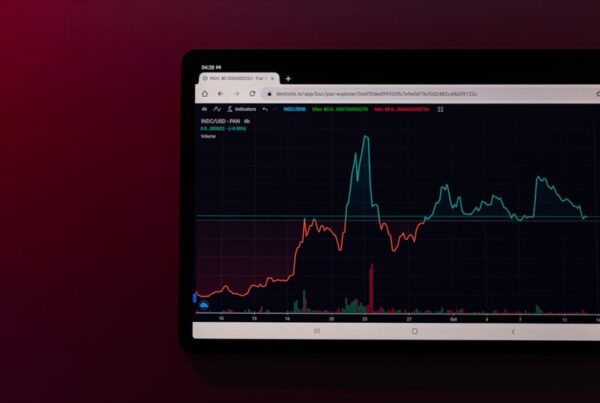


Another day, another compromised private key. This weekend, the Resolv protocol got drained after a malicious actor gained access to infrastructure through a compromised key, minting tokens out of thin air and triggering a depeg that rippled across the market. BTC tested $68K support. Liquidations stacked up. The usual carnage.
And somewhere in the wreckage, the same lesson we keep refusing to learn: if a single compromised key can bring your entire protocol down, your architecture is broken.
TL;DR
- The Resolv protocol hack was caused by a compromised private key giving a single actor the ability to mint tokens
- Any system where one key controls critical functions has a single point of failure, regardless of what blockchain it runs on
- Trustless architecture means removing human key holders from the equation entirely
- On-chain gaming platforms like Satoshie use Chainlink VRF specifically to eliminate this class of vulnerability
- Being “on-chain” isn’t enough. The question is whether the protocol can function without trusting any individual
What Actually Happened
The details are still emerging, but the pattern is depressingly familiar. Someone got hold of a private key that controlled critical infrastructure. With that key, they minted tokens they shouldn’t have been able to mint. The token depegged. Panic spread. Money evaporated.
This isn’t a smart contract exploit in the traditional sense. The contracts may have been perfectly audited. The code may have been flawless. None of that matters when the keys to the kingdom are sitting in someone’s compromised wallet or server.
It’s the equivalent of building an impenetrable vault and then leaving the combination written on a Post-it note.
The Single Key Problem
Here’s what frustrates those of us building in this space: we’ve known about this problem since day one. The entire point of blockchain is to remove single points of trust. Yet protocol after protocol ships with admin keys, upgrade keys, minting keys, pause keys — all controlled by individuals or small multisigs that are only as secure as their weakest member.
The argument is always the same: “We need admin access for upgrades and emergencies.” And that’s sometimes true during early development. But there’s a massive difference between a protocol that’s working toward immutability and one that treats centralised control as a permanent feature.
When your DeFi protocol, your gaming platform, or your stablecoin can be fundamentally altered by whoever holds a specific key, you haven’t built a decentralised system. You’ve built a centralised system with extra steps.
Why This Matters for On-Chain Gaming
Gaming amplifies this problem because the stakes are immediate and personal. When someone plays a raffle or places a coinflip bet, they need to know two things:
- The outcome is genuinely random and can’t be manipulated
- Nobody — not the platform, not an admin, not a hacker with a stolen key — can alter the result
Traditional online casinos fail spectacularly on both counts. They control the random number generation. They control the payout logic. They control everything. You’re trusting them completely, and the only thing backing that trust is a gambling licence and the hope that regulators are paying attention.
But here’s the uncomfortable truth: plenty of “on-chain” gaming platforms aren’t much better. If an admin key can pause contracts, modify payout ratios, or influence the randomness source, the platform is on-chain in name only. The trust assumptions are the same as a centralised casino — just with fancier infrastructure.
How Satoshie Approaches This Differently
When we built Satoshie, eliminating key-holder risk wasn’t an afterthought. It was the entire point.
Every raffle winner and coinflip outcome is determined by Chainlink VRF (Verifiable Random Function). This matters because the randomness doesn’t come from us. It comes from Chainlink’s decentralised oracle network, and every result includes a cryptographic proof that the randomness wasn’t tampered with.
No admin key can override a VRF result. No compromised server can alter which wallet wins a raffle. The randomness is generated off-chain by Chainlink nodes, verified on-chain by the smart contract, and the proof is publicly auditable by anyone. Forever.
Could someone hack our website? Theoretically. Could they change the CSS or mess with the UI? Sure. Could they alter the outcome of a single game? No. Because the game logic lives on-chain, and the randomness comes from a source we don’t control and can’t influence.
That’s the difference between “built on blockchain” and “trustless.”
The Uncomfortable Questions Every Platform Should Answer
After incidents like the Resolv hack, every crypto user should be asking harder questions about the platforms they use:
- Who holds the keys? If admin keys exist, who controls them? What can they do? Is there a timelock?
- Can one key compromise the system? If the answer is yes, full stop, that’s a centralisation risk regardless of the blockchain underneath.
- Where does randomness come from? For gaming platforms specifically: is it generated on-chain with verifiable proofs, or is it server-side with pinky promises?
- What’s the upgrade path? Can contracts be upgraded by a single signer? Is there a governance process? Or are critical contracts immutable?
- Can you verify independently? Can you check the smart contract, verify the randomness proof, and confirm the outcome yourself? Or do you just have to trust what the platform tells you?
These aren’t gotcha questions. They’re the minimum bar for any platform that claims to be decentralised.
Trust Isn’t a Feature, It’s a Bug
The Resolv hack is a reminder that “decentralised” is a spectrum, not a binary. Running on Ethereum doesn’t make you trustless. Having a smart contract doesn’t make you secure. The only thing that makes you trustless is actually removing the need for trust — in your key management, in your randomness, in your governance, in everything.
At Satoshie, we think on-chain gaming should mean exactly what it says: games that run on-chain, with outcomes determined by verifiable randomness, where no single actor can influence the result. Not because we’re idealists (though maybe a bit), but because anything less isn’t really on-chain gaming. It’s just a regular casino wearing a blockchain costume.
The next time someone pitches you a “decentralised” platform, ask them what happens if their private key gets compromised. If the answer makes you uncomfortable, it should.
📷 Photo by Patrick Szalewicz on Unsplash