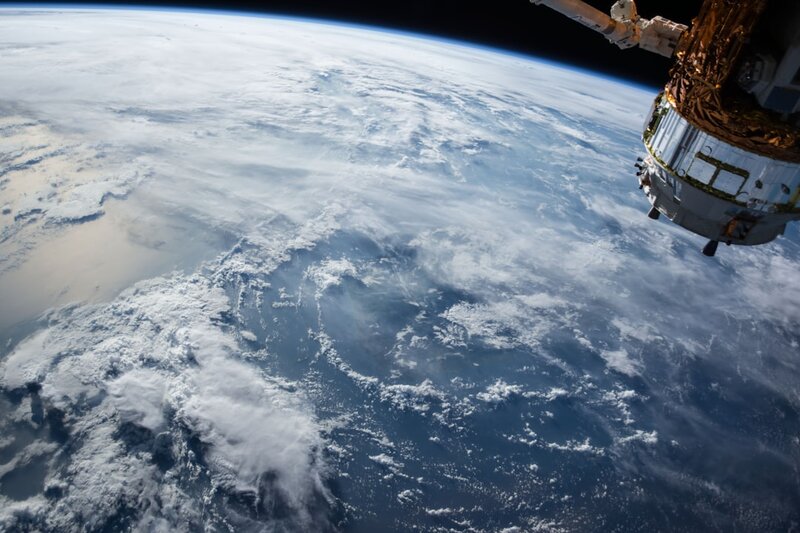

Google launched an AI image tool inside Google Earth and pulled it roughly a day later. The tool, nicknamed Nano Banana, let anyone generate a plausible satellite scene from a text prompt. The people who objected loudest were not artists or privacy campaigners. They were open source investigators, the researchers who use satellite imagery to verify breaking news: troop movements, deforestation, damaged infrastructure, ships that are not where their transponders claim they are. Their objection was simple. If a convincing overhead image of anywhere can be conjured in seconds, then an overhead image of anywhere stops functioning as evidence of anything.
Google made the right call, and it does not matter. The tool being withdrawn does not restore the property it broke. Satellite imagery was one of the last categories of picture that most people treated as true by default, and the reason was never cryptographic. It was economic. Faking one used to be expensive and slow, so a fake was rare, so a picture was probably real. That was the whole basis of the trust, and it has now gone the way of every other visual medium.
TL;DR
- Google withdrew its Google Earth AI image generator within a day after investigators warned it could produce convincing fake satellite scenes from a text prompt.
- Satellite imagery was trusted because faking it was expensive, not because it was verifiable. That economic barrier is now gone permanently, and withdrawing the tool does not bring it back.
- Almost everything crypto gaming offers as proof is a rendered artefact: screenshots, result feeds, livestreams, replays, operator-hosted verification pages, dated RNG certificates. All of them are produced by the party with a financial interest in the outcome.
- The test that survives an AI world is whether verifying a claim requires the artefact the interested party handed you. If it does, it was never proof.
- Chainlink VRF passes that test because the request, the cryptographic proof and the resolution are all logged on a public chain that you query yourself, from a node of your choosing, without the platform in the path.
The barrier was cost, not truth
It is worth being precise about what actually changed this week, because the lesson generalises well beyond mapping software. Nothing about satellite imagery became less accurate. What changed is that the cost of producing a convincing artefact fell below the cost of checking one. Once that inversion happens in any medium, the artefact stops carrying information. It is not that you now see more fakes. It is that a real image and a fake image have become indistinguishable to the person looking at them, which means looking is no longer a verification method.
Every industry that quietly relied on looking is about to discover which of its trust practices were real and which were habits. Crypto gaming is going to discover this very badly, because looking is essentially the entire product.
Ask what a crypto game actually hands you as proof
Go through the list, honestly. A screenshot of your result. A live feed of recent winners scrolling down the side of the page. A streamed wheel spin. A replay you can scrub through. A verification page hosted by the operator, on the operator’s domain, rendered by the operator’s code, telling you the operator’s outcome was fair. An RNG certification PDF from a testing lab, often dated years ago, covering a version of a system that has since been redeployed a hundred times. A footer badge.
Every single item on that list is a rendered artefact produced by the party with a direct financial interest in what it says. That was already the problem. Generative AI did not create it. What AI did was strip out the last practical friction, the vague sense that fabricating all of that convincingly would be a lot of effort for a small platform. It is now trivial. A believable winner feed, populated with plausible usernames, plausible amounts and plausible timestamps, is a weekend of work at most, and increasingly an afternoon. A convincing replay of an outcome that never happened is a generated video.
None of that requires a sophisticated adversary. It requires a product manager and a growth target.
The distinction that matters
Here is the line to hold on to, because it is the one that survives every future improvement in generative models. A claim is verifiable when checking it does not depend on any artefact the interested party gave you. If your verification path routes through the platform, you are not verifying, you are reading a claim in a nicer font.
This is why the hash-based schemes that most crypto casinos market as provably fair keep failing the test. The construction is real cryptography: a server seed is committed in advance as a hash, a client seed gets mixed in, the seed is revealed afterwards and you can check the hash matches. But the server seed is chosen by the operator, generated on the operator’s infrastructure, from entropy nobody outside the operator ever sees. Checking the hash proves the operator was consistent with a value it picked in private. It says nothing whatsoever about whether that value was random, or whether it was selected from a set of candidates that happened to favour the house. The maths is sound and the maths is answering a question you did not ask.
What actually survives
Chainlink VRF passes the test, and it passes it structurally rather than by anyone’s good behaviour. A game contract requests randomness and that request is a transaction, logged publicly with an identifier. The VRF coordinator returns a random word together with a cryptographic proof that it was derived from a key pair committed to long beforehand, and the coordinator contract verifies that proof on chain before your game contract is ever allowed to see the number. Resolution is logged too. Everything is on a public ledger, in the open, permanently.
The crucial part is not that the data exists. It is where you get it from. An AI can generate a perfect image of a BaseScan page showing whatever result someone wants you to believe. It cannot generate BaseScan, because you go there yourself, and if you do not trust BaseScan you point your own client at any Base node you like, or run one, and read the same logs. The platform is not in that path at any point. There is nothing for it to render, nothing for it to host, nothing for it to fabricate, because it was never the source.
That is the difference between transparency and evidence. Transparency is a platform showing you things. Evidence is you being able to check without asking the platform for anything.
Three questions worth asking any platform
They are the same three questions regardless of how good generative models get, which is rather the point.
First: if the operator’s website went dark right now, could you still verify last night’s result? If the answer is no, the verification was hosted, not proved.
Second: where does the randomness come from, and can you check its origin without trusting anyone’s word about it? A committed hash of a privately chosen value is not an answer. A cryptographic proof verified on chain is.
Third: what does the game hand you as proof, and who rendered it? If the honest answer is a screenshot, a feed, a stream or a badge, you are holding a picture of a claim.
Where Satoshie sits
Satoshie runs raffles and coinflips on Base using Chainlink VRF, and every part of a game outcome is a public log entry rather than something we show you. That was always the design intent, but the reasoning has aged unusually well. We did not build it this way in anticipation of AI-generated evidence. We built it this way because a game whose fairness depends on players believing the operator is not fair, it is just polite.
Google spent one day learning that a tool which makes fake evidence cheap cannot be un-shipped, because the knowledge that the evidence is cheap is the actual damage. Crypto gaming has a much larger version of the same problem sitting in plain view, and it has not started the day yet. The platforms that get through this are the ones that can point at a chain rather than a screenshot. Everyone else is going to spend the next few years explaining, at increasing volume, why you should believe a picture.