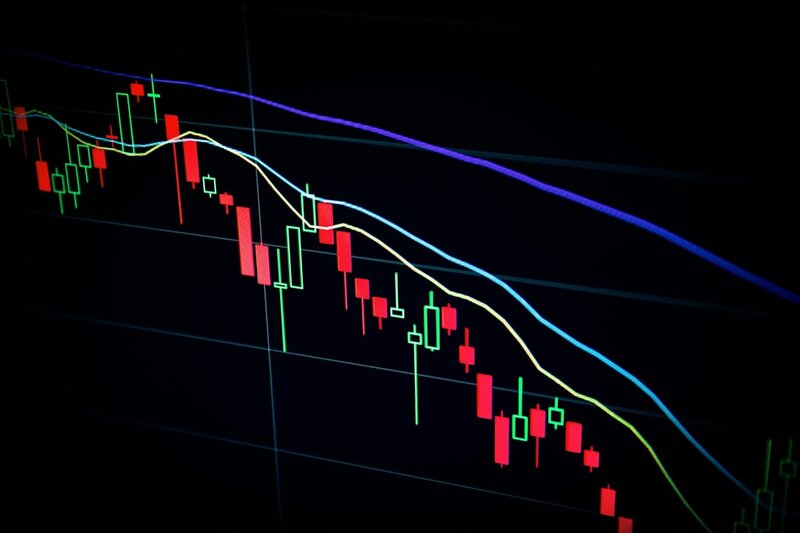

Tokenised equity trading volume rose 288% in July. Remove one instrument, a tokenised QQQ product, and the same month lands at roughly $2.03 billion, about 30% below June. Same data set, same thirty one days, two headlines pointing in opposite directions.
Nobody lied. The 288% is arithmetically correct. So is the 30% decline. That is the uncomfortable part, and it is the most useful thing to happen to crypto reporting all week, because it demonstrates something crypto gaming has spent three years avoiding: an aggregate is a lossy summary, and whoever picks the aggregate picks the story.
TL;DR
- Tokenised stock volume grew 288% in July, but stripping out a single QQQ token leaves roughly $2.03 billion, around 30% below June’s total.
- Both figures are true. Aggregates are lossy, and the party publishing one chooses which story it tells.
- The correction was only possible because tokenised equities settle on-chain, where per-instrument volume is public and anyone can decompose it without asking permission.
- Crypto gaming publishes the same shape of number (players, volume wagered, return to player) with none of the decomposability, because the underlying rows sit in a private database.
- A self-reported statistic is the statistical version of a self-chosen server seed: consistent with something the operator picked in private, and proving nothing about what actually happened.
- On Satoshie, every raffle ticket and every coinflip is an on-chain event resolved by Chainlink VRF, so volume, concentration and payout ratios are computations anyone can run rather than claims anyone has to accept.
The number was real, and so was the correction
Concentration in a young market is not a scandal. New venues launch, one product finds liquidity first, and for a while that product is the market. Tokenised equities are barely out of the pilot stage, so it would be stranger if volume were evenly spread across a hundred instruments.
The interesting question was never whether the concentration existed. It is whether anyone outside the venues could see it. In this case they could, so the 288% headline lasted about as long as it took someone to sort a table by ticker, and the growth story and the contraction story ended up published side by side. That is a functioning information environment, and it is rarer in crypto than most people assume.
The correction only happened because the data was on-chain
There was no freedom of information request, no data licence, no press office, no quarterly disclosure obligation. Tokenised equities settle on public infrastructure, so per-token volume is a query rather than a favour. An analyst who suspected the headline was being carried by one instrument could test that suspicion in an afternoon, from a laptop, without anyone’s cooperation.
Run the counterfactual. If those same products had traded on a private venue, the venue’s monthly summary would be the entire historical record. You would get 288%, you would get a chart, and you would have no method for asking what happens if you remove the largest line item. Nobody publishing their own growth number volunteers the decomposition that undercuts it. Not because they are crooks, but because nobody does that, ever, in any industry.
Crypto gaming ships the aggregate and keeps the rows
Now look at how gaming in this sector reports itself. Ten million players. Four point seven billion dollars wagered. Ninety seven percent return to player. Over a million games played since launch. Every one of those numbers has the same structure: a single figure, self-reported by the interested party, computed over a window the platform selected, from a data set the platform holds and will not publish.
Some of them are true. You have no method for working out which. Ten million “players” could be two hundred thousand humans running wallet farms for an airdrop. Four point seven billion “wagered” could be a dozen addresses cycling the same capital through a loop, which would be trivially visible if the bets were on-chain and completely invisible if they are not. Ninety seven percent return to player is a real computation over some window, and the entire content of the claim sits in which window, which you were not told.
The tokenised equity story is what it looks like when a market is subject to hostile decomposition. Crypto gaming has never once been subject to it, and the industry has mistaken that immunity for a clean record.
Self-reported statistics are self-chosen server seeds
Crypto casinos love the phrase “provably fair” for hash-based server seed schemes. You verify that the operator was consistent with a value it committed to in private. It proves consistency and says nothing whatsoever about whether the value was random, because the operator chose it and never had to justify the choice.
A self-reported metric is the identical failure one level up. The platform hands you an output consistent with a data set it holds privately, and the only way to check it is to ask the platform for more of its own data. The verification loop never leaves the operator’s control. That is not a weak check. It is a check that cannot fail, which is the same thing as not being a check.
What decomposable actually looks like
Satoshie runs raffles and coinflip on Base. Every ticket, every flip, every resolution is a transaction that emits events. That is not a marketing point, it is a set of consequences.
Volume is a sum over events, not a figure we announce. Concentration is a group-by on the address field, so you can ask what share of last month’s activity came from the ten busiest wallets and get a real answer. The payout ratio is computed from resolved bets over whatever window you feel like choosing, not the flattering one we would have picked. The randomness behind each result is a Chainlink VRF request and fulfilment pair you can trace independently of anything we say.
The part that matters most: we cannot stop you running any of it, and we cannot see that you ran it. A critic can decompose our numbers exactly the way an analyst just decomposed July’s tokenised equity volume, and we do not get a say in whether that happens or in what it turns up.
The honest version
On-chain numbers are not automatically true. Wash trading happens on-chain, wallet farms are on-chain, and a platform can absolutely inflate its own volume using its own addresses. Several have. Anyone telling you “it is on-chain, therefore it is real” is selling something.
The difference is not honesty, it is detectability. Inflated on-chain volume leaves a funding trail, an address graph and a timing pattern, and a sceptic with a free RPC endpoint can go and find it. Inflated off-chain volume leaves a press release. One is a claim you can attack. The other is a claim you can only believe or ignore, and belief is not a security model.
The test
Stop asking platforms whether their numbers are real. Ask whether you could break them.
Take the headline figure and try to remove one participant from it. Can you work out how much of that volume came from the ten largest addresses? Can you compute the payout ratio over a window you picked instead of the one they published? Could you do any of it tonight, from your own machine, if the site went offline?
If those answers are yes, the number can survive a hostile reader, which is the only kind of verification worth anything. If they are no, you do not have a number. You have a sentence with a figure in it.
A journalist with a block explorer just audited an entire asset class in an afternoon. Crypto gaming should be embarrassed that the same audit is impossible on nearly every platform in the sector, and should understand that this is a decision about architecture, not a comment on anyone’s character.
Play provably fair raffles and coinflip on Base at satosh.ie, where every outcome is resolved by Chainlink VRF and every number is yours to check.
📷 Photo by Maxim Hopman on Unsplash