
Standard Chartered began quoting spot bitcoin and ether to institutional clients in the United Arab Emirates on 3 September 2026, and every headline led with the same line: first global systemically important bank to offer it in the Gulf. Fine. True. Not the interesting part.
The interesting part is buried in the plumbing. Eligible clients trade deliverable BTC and ETH through the bank’s existing electronic channels, the same type of interface they already use for foreign exchange, out of its DIFC-regulated entity, settling to a custodian of their choice. It extends the UK branch launch of July 2025 and bolts execution onto the UAE custody service the bank stood up in September 2024.
Read that again. Bitcoin just got plugged into the FX rail. Of all the market structures on earth to inherit, they picked the one with no public price.
TL;DR
- Standard Chartered launched institutional deliverable spot BTC and ETH trading in the UAE on 3 September 2026, via its DIFC entity and its existing FX electronic channels, with client-choice custody settlement.
- Foreign exchange is the biggest market in the world and it has no consolidated tape. There is no public record of the price you were quoted, and no way to check it against the price the client before you got.
- Crypto’s entire fairness literature covers the resolution, whether the outcome was honest. It almost never covers the entry, whether your terms were the same as everyone else’s.
- Dealer markets price the counterparty as well as the asset. That is not fraud, it is the design, and it is exactly the thing a proof cannot reach.
- Satoshie’s ticket price and odds are constants in a deployed contract, identical for every address, readable before you commit. No desk, no quote, no tier.
- The honest limit: equal price is not equal cost. Gas and priority fees are an auction Satoshie does not run and cannot prove away.
The half of fairness nobody asks about
This series has spent forty-five instalments picking at one question from different sides: was the outcome honest? Was the number manipulable, was the reading checkable, was the exit yours, was the prize escrowed, did the block survive the week. All resolution. All the back half of the transaction.
THE PRICE NOBODY PUBLISHED is the forty-sixth unasked half of fairness, and it lives at the front. Before any mechanism resolves anything, you agreed to terms. A proof that the draw was clean says nothing about whether you and the person next to you entered on the same footing. Those are two separate properties and crypto has spent a decade obsessing over one of them.
Foreign exchange is the purest example of the neglected half. It turns over trillions a day and there is no NBBO, no consolidated tape, no single printed price. You ask a dealer, the dealer quotes you, you deal or you do not. The quote is a function of the asset, yes, but also of your size, your credit, your flow, your relationship, and the dealer’s inventory at that instant. Two clients can ask the same bank for the same pair in the same second and get different numbers, and neither one can ever verify what the other was shown.
This is not an accusation
Worth being clear, because the crypto reflex here is to shout “scam” and stop thinking. A bilateral quote is not theft. Request-for-quote exists for good reasons: the dealer is warehousing risk, size moves the market, credit is not uniform, and a client who wants to move a hundred million without telegraphing it to a public book is being served, not fleeced. Standard Chartered is a regulated institution operating under DIFC supervision, and the FX Global Code exists precisely because the industry sat down after the last mess and wrote conduct standards. That work was real.
But look at what the fix was. When the WM/Reuters 4pm fix scandal broke, banks paid something on the order of ten billion dollars in penalties across 2013 to 2015 over traders coordinating in chatrooms. Standard Chartered’s own share of that reckoning arrived in January 2019, a $40m NYDFS penalty over failures to deter illegal FX conduct between 2007 and 2013. The remedy was supervision, codes of practice, surveillance and fines. All of it applied afterwards, by an authority, to behaviour that had already happened.
That is the shape of fairness in a dealer market. It is a promise backed by an institution and audited in arrears. It works, mostly, because the institution has a licence to lose. It is a completely different kind of object from a fairness you can check yourself, in advance, without asking anyone’s permission.
Bitcoin’s front half is now somebody’s relationship
Here is the bit that should sting. The asset in question was designed so that no counterparty is required to know the state of the ledger. Every satoshi that moves is public. Every issuance is auditable by anyone with a laptop. Bitcoin’s back half is arguably the most verifiable settlement layer humans have built.
And the price at which an institution acquires it is now a private conversation on an FX interface.
None of that is Standard Chartered’s fault. It is what happens when a verifiable asset is accessed through an unverifiable market structure: the transparency does not propagate upward. The chain proves what you own. It has never had anything to say about what you paid, or why the desk showed you that particular number and not the one it showed the fund down the road.
What this looks like when the terms are bytecode
On Satoshie, entry is not a quote. A raffle’s ticket price is a constant in the deployed contract. The odds are a function of the entry count, published in the same code, before a single ticket is sold. The coinflip’s payout multiple sits in the contract with the escrow and the VRF callback, and the whole thing settles in one transaction. Every address reads the same numbers. There is no desk deciding what you are shown, because there is nobody to decide and nothing to show.
The point is not that this is nicer. The point is that it is a different category of claim. A bank’s execution fairness is a statement about conduct, verified by a regulator, after the fact. A contract’s entry terms are a statement about bytecode, verified by you, before you commit. Chainlink VRF gives the same treatment to the back half: the randomness is requested, proven and verified on-chain, so the platform cannot grind for an outcome it prefers.
Front half and back half, same kind of object. That is the whole design.
The honest limit
Equal price is not equal cost, and pretending otherwise would be exactly the sloppiness this series exists to call out.
The ticket costs the same for everyone. Getting the transaction included does not. Gas is an auction, priority fees are real, and on a raffle that fills up, whoever paid for faster inclusion got in and somebody else did not. Satoshie does not run that auction, does not receive that money and cannot prove it away. It is a genuine asymmetry sitting one layer below the contract, and it is the same category of problem as the reorg question from the fourteenth instalment: the guarantee is airtight inside its window and silent about everything outside it.
There is a second one. The token you pay in has a price nobody in the contract proves. Constant ticket price, floating denominator. The mechanism is honest about what it covers, which is more than most things in this industry manage.
So: the fairness you can verify keeps getting narrower and deeper, and the fairness you have to trust keeps getting institutional. Standard Chartered’s UAE launch is a good thing for access and a genuinely interesting bit of market plumbing. It is also a reminder that the industry has been arguing about honest dice while quietly conceding the price of admission.
Ask for both halves. Ask what your entry terms are, ask whether anyone else got different ones, and ask whether you can check without permission. If the answer to the last one is no, you have a promise, not a proof.
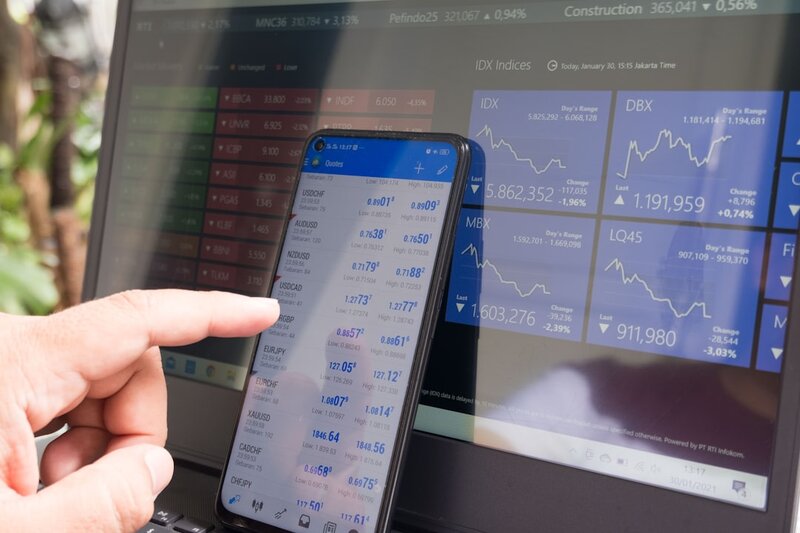
📷 Photo by Marga Santoso on Unsplash