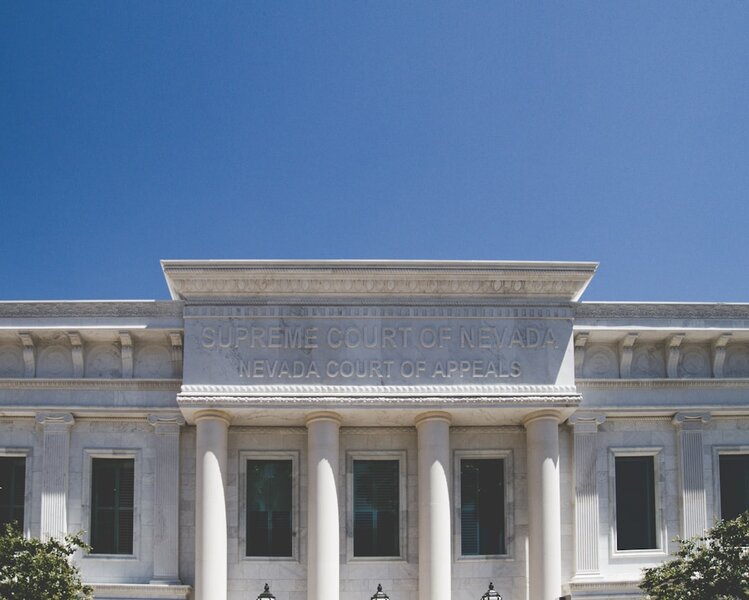

On 2 September, New Jersey Attorney General Jennifer Davenport filed a 332-page petition asking the US Supreme Court to decide who regulates sports betting on prediction markets. The petition exists because two federal appeals courts looked at the same product and gave opposite answers five months apart.
In April, the Third Circuit held that the CFTC has exclusive authority over Kalshi’s event contracts and that New Jersey could not enforce its gambling laws against them. On 28 August, a unanimous Ninth Circuit panel held the opposite: Kalshi’s sports event contracts are probably sports wagers under Nevada’s statutes rather than swaps under the Commodity Exchange Act, and Nevada can resume enforcement.
Nothing about the contract changed between those two rulings. Same exchange, same order book, same settlement sources, same fee. The only variable was the map.
TL;DR
- New Jersey has become the first state to ask the US Supreme Court to settle whether Dodd-Frank preempts state gambling law for CFTC-registered event contracts.
- A genuine circuit split now exists: the Third Circuit sided with Kalshi in April, the Ninth Circuit sided with Nevada on 28 August, on materially the same question.
- This is the forty-fifth unasked half of fairness, and it is a new shape: forum-bound control, a power over your bet held by nobody the operator can audit and nobody you can read the terms of.
- Fairness is a property of the mechanism. Permission is a property of the map. The industry sells them as one thing every time it puts a licence badge in a footer.
- A Chainlink VRF proof does not become provisional while a court decides. That is a narrow guarantee, and the honest limit is that permissionless is not the same as legal.
What actually happened
New Jersey sent Kalshi a cease and desist last year, alleging its sports event contracts violated state gambling law. Kalshi sued, and in April the Third Circuit found for Kalshi on federal preemption grounds. Nevada ran the same fight in the other direction and won it at the Ninth Circuit in late August, with the panel rejecting Kalshi’s argument that complying with both Nevada law and the Commodity Exchange Act was impossible.
The question Davenport has put to the Supreme Court is whether the 2010 Dodd-Frank Act preempted states from regulating sports bets placed inside their own borders when those bets are offered on a CFTC-registered market. Her stated reasons for wanting the answer to be no are compulsive gambling, gambling by minors, and insider trading on sporting events.
Kalshi’s position, via a spokesperson: “Kalshi is an open, nationwide financial exchange. It cannot be regulated by 50 different regulators.”
Both statements are reasonable. That is the interesting part.
Fairness and permission are not the same property
This series has now run forty-four instalments asking a single question in different clothes: besides the draw itself, what else decides what you take home? The answers have been platform discretion, the entrant set, the float sitting in escrow, the powers baked into the token your winnings are paid in. Every one of those is a power somebody holds and, in principle, a power you could go and read about.
This one is different, and it took a circuit split to make it visible.
Imagine the fairest possible version of Kalshi. Settlement sources chosen in advance and published. Fees quoted on the wager and nowhere else. No discretion to void, no ability to delay, resolution rules a stranger could apply and get the same answer. Every one of those improvements is completely invisible to the question now sitting on the Supreme Court’s docket. You can build a perfectly honest venue and still have two federal appeals courts disagreeing about whether you were ever allowed to open the doors.
Fairness is a property of the mechanism. Permission is a property of the map. They are sold as one thing constantly, in every footer that pairs a licence number with an audit badge, and the split is the cleanest demonstration you will get that they come apart.
Account-bound, asset-bound, forum-bound
The last instalment drew a line between account-bound control, which is discretion you opted into by signing up, and asset-bound control, which arrives attached to the token you get paid in whether you agreed to anything or not.
Add a third. Forum-bound control is held by nobody the operator chose, exercised on a timeline nobody can observe, over a question the operator itself cannot currently answer. Read the Kalshi line again as a description rather than an argument: the exchange is telling you it does not know how many regulators it has. That is not evasion. It is genuinely unresolved, and it will stay unresolved until a court that has not agreed to hear the case decides whether to hear the case.
The sting is retroactivity. A revoked licence stops you betting next month. A holding that a venue never had the authority it claimed reaches backwards, over positions that already opened, resolved and paid.
Give the states their due
Compulsive gambling is real. Minors getting on to betting platforms is real. Insider trading on sports outcomes is real, and it is a problem the CFTC has considerably less institutional muscle memory for than a state gaming board that has been at it for decades.
On-chain gaming has approximately none of those protections either. A VRF proof does nothing whatsoever for a player at four in the morning who should have stopped three hours ago. Pretending verifiable randomness answers a question about self-exclusion would be exactly the sleight of hand this series keeps complaining about when other people do it. The states are not obviously wrong here. What they are is slow, and while they are slow the answer to “is this legal where I am standing” is two answers at once.
What VRF actually settles
A Chainlink VRF proof is recomputable by a stranger who needs permission from nobody. It verified in the block it landed in, it verifies today, and it will verify in 2030 regardless of which way the Supreme Court goes, because the proof does not depend on anyone’s authority to have offered the game in the first place.
That is a narrow guarantee and it is worth stating narrowly: the draw is not provisional. On Satoshie a coinflip escrows the stake, resolves on VRF and pays out in one transaction, with the only duration being the Chainlink callback measured in blocks. A raffle has a window by definition, but the money sits in an immutable contract with no admin key and no function anyone can call to move it early. Nothing in the settlement path waits for a human, which means no outcome of ours can be held open while a legal question resolves somewhere else.
The honest limit, and it is a large one
Permissionless is not the same as legal. Satoshie has no licence to lose because there is no licence, and this series has said that before as though it were the whole sentence. It is half of one.
The other half: there is also nobody to petition on your behalf. Kalshi has lawyers, a 332-page adversary and a shot at a hearing. If a state decides tomorrow that an on-chain coinflip is a wager under its law, our contract will keep resolving draws exactly as specified and you will be the person holding the question. The draw survives the ruling. That is a real property and a genuinely useful one. It is not the same as you surviving it.
Naming that trade is better than dressing it up. On-chain gaming’s answer to the jurisdiction fight is not “we win”. It is “we are not in the room”, which is an advantage in one direction and a cost in the other.
Three questions worth asking
- If the venue you used were held tomorrow to have never been permitted to offer the product you bought, what happens to the position you already closed?
- Which of the fairness claims on your platform’s homepage would still be true if its regulator changed? If the answer is none of them, they were claims about permission, not about fairness.
- How long does the outcome of your bet stay provisional after the event has happened, and who is capable of extending that window?
The Supreme Court will take months to decide whether it even wants this, and longer to answer it if it does. In the meantime the same contract is a swap in one circuit and a sports bet in another. Whatever else that is, it is not a fact about the game.
📷 Photo by Quilia (@heyquilia) on Unsplash