

Google “crypto gaming July 2026” and count the results. Go on. I’ll wait.
Every single result on the first page is a listicle telling you which gaming tokens to buy. “Top 5 Gaming Crypto Presale Tokens Gaining Momentum.” “7 Best Gaming Crypto Coins to Invest In.” “Best Crypto Presales Tested and Audited.” Not one of them tells you which game is actually worth playing. Not one asks whether the game is fair.
This is the tell. The entire crypto gaming industry has been reduced to a financial product wearing a controller as a hat.
TL;DR
- Every major crypto publication lists gaming tokens as “investments to buy” rather than games worth playing — revealing that crypto gaming is a financial product, not entertainment
- Gaming presales in July 2026 are raising millions for custom L2 chains and $1M prize pools without any provable fairness mechanism
- The “invest in gaming tokens” framing attracts speculators, not players — creating an ecosystem where the game is irrelevant to the token’s value
- Provably fair on-chain gaming flips the model: you play a game, you verify the outcome, no token required
- If the most common question about your gaming platform is “when token?” rather than “is it fair?”, you have built a financial instrument, not a game
The Listicle Industrial Complex
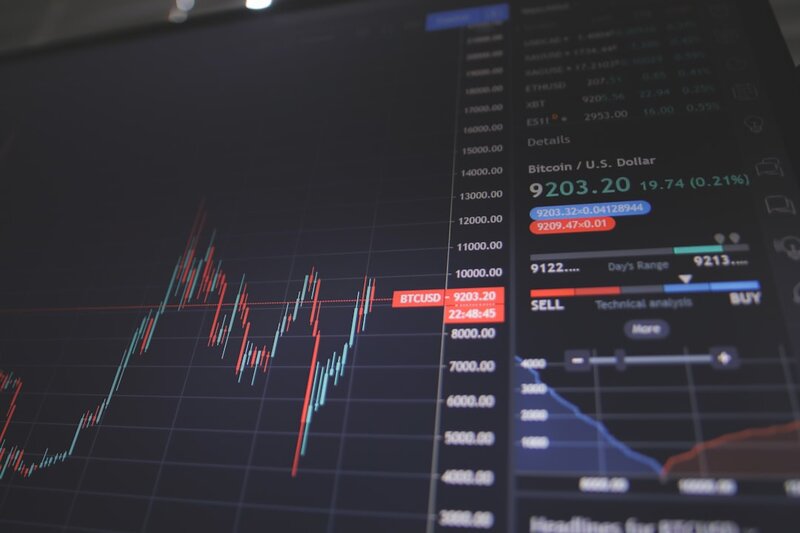
Right now, in the middle of a market correction with Bitcoin hovering around $63,000 and the Fear and Greed Index at 25, gaming presales are still pulling in fresh money. Dogeball is running a play-to-earn dodgeball game on a custom Ethereum Layer 2 with a $1 million prize pool. SkyFleetDash is building a spacecraft racing MMORPG across ten blockchains. Vulcan Forged just doubled its PYR prize pool.
None of these projects are being evaluated on whether their games are fair. Every single review, every listicle, every “top picks” article evaluates them on token price potential, presale ROI, and market cap projections. The game itself is an afterthought. A checkbox. “Has product: yes.” Moving on.
This is not an accident. This is the business model.
When the Product Is the Token, the Game Is Irrelevant
Think about what happens when a publication lists a gaming token as an “investment.” They are telling you to bet on the casino’s stock, not play a fair game. The incentive structure is completely inverted. The project’s success is measured by token price, not by player satisfaction, game fairness, or outcome verifiability.
This creates a perverse feedback loop. Projects optimise for token price. Token price is driven by hype, presale mechanics, and exchange listings. Games are bolted on as justification for the token’s existence. Nobody asks whether the dodgeball outcomes are verifiable. Nobody checks whether the spacecraft race results are generated by a server the developer controls.
The result? An entire ecosystem of games where the most important question — “is this fair?” — is never asked because it is never relevant to the investment thesis.
The Presale Model Is Structurally Incompatible with Fairness
Consider the mechanics. A gaming presale raises money by selling tokens before the game exists. Early buyers get cheaper tokens. The project launches, token pumps on listing, early buyers sell. The game? It either ships months later with minimal functionality, or it ships with impressive graphics and zero verifiable fairness.
This is not speculation. CryptoManiaks published their “7 Biggest Crypto Presale Scams of 2026” list this month. BlockDAG, ZKP Blockchain, MAGACOIN, MaxiDoge — all raised millions through presales with unrealistic ROI claims, anonymous teams, and no working products. The ones that weren’t outright scams simply never delivered a fair game.
The presale model actively discourages fairness. If your revenue comes from token sales, your incentive is to make the token valuable, not the game fair. Provable fairness is expensive to implement and provides zero benefit to token speculators. So it gets deprioritised. Every time.
The Ten-Blockchain Problem
SkyFleetDash is building across ten blockchains. Ten. A spacecraft racing game that needs to maintain state, verify outcomes, and settle results across ten separate chains with ten separate consensus mechanisms and ten separate security models.
This is not a feature. This is a liability. Every additional chain is another attack surface, another bridge to exploit, another consensus mechanism to trust. We have watched this play out repeatedly — Ronin’s $625 million hack, Kelp DAO’s $292 million bridge exploit, THORChain’s $10.8 million cross-chain drain. Multi-chain architecture is complexity theatre.
On-chain gaming does not need ten chains. It needs one chain, one smart contract, and one source of verifiable randomness. Satoshie runs on Base with Chainlink VRF. Every raffle, every coinflip, every outcome is verifiable on a single chain with a single source of cryptographic proof. No bridges. No cross-chain state management. No ten-blockchain attack surface.
What “Invest in Gaming” Should Actually Mean
Here is what no listicle will ever tell you: the most important metric for a crypto game is not its token price, market cap, or presale discount. It is whether you can independently verify that the game’s outcomes are fair.
Can you check the smart contract? Can you verify the randomness source? Can you confirm that no admin key can alter the result after you have placed your bet? These are the questions that matter. These are the questions that every “top gaming crypto to invest in” article systematically ignores.
Provably fair on-chain gaming does not need a token to function. Satoshie’s raffles and coinflips run on smart contracts with Chainlink VRF providing verifiable randomness. There is no token to pump. There is no presale to front-run. There is a game, it is fair, and you can prove it yourself on-chain.
The Market Is Telling You Something
The Fear and Greed Index is at 25. Bitcoin is down from its highs. And gaming presales are still raising money. This should worry you. Not because markets go down — markets always go down — but because the money flowing into crypto gaming presales is flowing into financial products, not games.
When the correction deepens, the tokens will dump. The presale buyers will be left holding bags. The games, if they ever ship, will have empty servers. And the publications that told you to “invest in the top 5 gaming tokens” will publish a new list next month with five different tokens.
The games that survive are the ones that never needed a token price to justify their existence. The ones where the value proposition is simple: play a fair game, verify the result, move on with your life.
That is what on-chain gaming should be. Not an investment vehicle. Not a presale opportunity. A fair game you can actually play.
📷 Photo by Nick Chong on Unsplash