
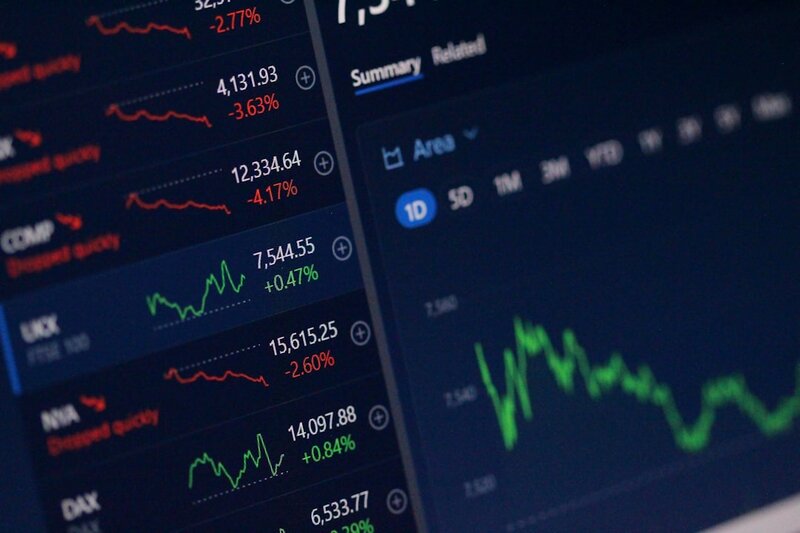

Nasdaq just put its most valuable market data product on the blockchain. Not a press release. Not a proof of concept. The actual TotalView order book — every bid, every ask, every price level, every opening and closing auction imbalance — is now distributed on-chain through the Pyth Network.
Let that sink in. The second-largest stock exchange in the world, handling trillions in daily volume, has decided that on-chain data infrastructure is reliable enough for its crown jewels. And yet most crypto games still generate their outcomes on a private server that nobody can audit.
TL;DR
- Nasdaq is distributing its TotalView order book data on-chain via the Pyth Network — the first time traditional market data has gone fully on-chain
- This validates on-chain oracle infrastructure at the highest institutional level — if Nasdaq trusts it, crypto gaming has no excuse for server-side RNG
- Pyth and Chainlink represent the same thesis: verifiable, tamper-proof data feeds are the future of every digital system
- On-chain gaming using Chainlink VRF is architecturally aligned with where the entire financial industry is heading
- Satoshie was built on the assumption that on-chain verification would become the standard — Nasdaq just proved it right
What Nasdaq Actually Did
Nasdaq TotalView is not some lightweight data product. It is the definitive source for full order book depth on every Nasdaq-listed security. Institutional traders pay serious money for this data because it shows the complete picture — not just the best bid and ask, but every resting order at every price level, plus the imbalance information that signals where the market is likely to open and close.
By distributing this through Pyth, Nasdaq is saying something profound: on-chain infrastructure is production-grade. Not experimental. Not “interesting for DeFi.” Production-grade enough for the data that moves global equity markets.
Pyth is now the first on-chain network to distribute Nasdaq market data. Fintech platforms, DeFi protocols, trading bots, and analytics dashboards can all plug in directly. The wall between traditional finance data and blockchain applications just got demolished.
The Oracle Thesis Is Winning
Pyth and Chainlink are philosophically identical. Both argue the same thing: critical data should be delivered through decentralised, verifiable, tamper-proof networks. Not through a single API endpoint that could be manipulated, delayed, or shut down without notice.
Chainlink has been proving this thesis for years in DeFi — price feeds, proof of reserve, cross-chain messaging. Pyth has been doing the same for high-frequency trading data. And now Nasdaq, one of the most conservative institutions in global finance, has picked a side.
They picked on-chain.
This matters for on-chain gaming because it is the same architectural argument. Chainlink VRF does for game outcomes what Pyth does for market data: it takes a critical input — randomness — and delivers it through a verifiable, tamper-proof, on-chain pipeline. No server. No admin. No trust required.
Crypto Gaming Is Now the Laggard
Here is the uncomfortable reality. Nasdaq — a company that was founded before the internet existed — now trusts on-chain data infrastructure more than most crypto gaming platforms do.
Think about that. A sixty-year-old stock exchange distributes its order book on-chain. Meanwhile, the average crypto game in 2026 generates its outcomes on a centralised server, wraps it in a blockchain-themed UI, and calls it “Web3 gaming.” The blockchain is used for payments and NFTs, never for the thing that actually matters: verifying that the game is fair.
If Nasdaq can trust on-chain oracles with data worth billions, why can a crypto coinflip game not use Chainlink VRF for a coin toss?
The answer is obvious. It is not a technical limitation. It is a choice. And it is the wrong one.
What This Means for On-Chain Gaming
Every time a major institution adopts on-chain infrastructure, it validates the entire stack. Nasdaq choosing Pyth does not directly affect Satoshie or Chainlink VRF. But it removes the last credible objection to on-chain verification: that it is not ready for serious, production-grade applications.
It is ready. Nasdaq just said so.
On-chain gaming platforms that use VRF for provably fair randomness are not fringe experiments. They are architecturally aligned with where the entire financial industry is heading. Every game outcome verified on-chain. Every result auditable. Every player able to check, independently, that the outcome was not manipulated.
That is not a nice-to-have feature. That is the direction the world is moving. Nasdaq, one of the most institutional institutions on earth, just moved there too.
The Standard Is Set
Satoshie was built on a simple premise: if you are going to run games on the blockchain, actually use the blockchain. Not for branding. Not for token sales. For verification. Chainlink VRF generates the randomness. The smart contract executes the logic. The result is recorded on-chain. Nobody — not the platform, not the developers, not anyone — can alter the outcome after the fact.
When we made that choice, some people thought it was overkill. Why use VRF when a random number generator on a server is faster and cheaper?
Because Nasdaq just answered that question for us. Because the direction of travel is unmistakable. Because every serious system — financial, gaming, or otherwise — is moving toward on-chain verification. And the ones that are not will eventually have to explain why.
The era of “trust us, the game is fair” is ending. Not because of regulators. Not because of scandals. Because the infrastructure for verification exists, it works, and now even Nasdaq uses it.
The only question left is why your favourite crypto game does not.
📷 Photo by Anne Nygård on Unsplash