
On 7 October, Samsung Electronics America announced that stablecoin wallet functionality is coming to Samsung Wallet in the last week of October. USDC first. Eighty-two million compatible Galaxy devices in the United States. No separate app, no seed phrase, no gas token, no browser extension. The pitch is in the executive quote, and it is the most honest sentence in the whole release.
“We’re bringing USDC transfers into Samsung Wallet so eligible Galaxy users can get started without installing another app or managing private keys themselves,” said Woncheol Chai, EVP and Head of the Digital Wallet Team at Samsung’s Mobile eXperience business.
Read that again, because it is not a criticism. It is a product decision, and it is almost certainly the right one for what Samsung is building. It is also the reason this is the eighty-ninth unasked half of fairness. Crypto has spent a decade arguing that users should be able to verify things instead of trusting them. The largest consumer distribution event stablecoins have ever had arrives with verification designed out of it, on purpose, as a feature, and it will probably work.
TL;DR
- Samsung Wallet adds USDC transfers across 82 million US Galaxy devices in late October. Custody sits with Bastion, a licensed stablecoin custodian, with Coinbase as sub-custodian safeguarding the USDC in Coinbase Prime Vault. Samsung’s own footnote says it “does not hold customer funds”.
- Users get three verbs: buy, send to a compatible external wallet, cash out to a bank in 60-plus countries. There is no key, so there is no fourth verb. Nothing in the release describes calling a contract.
- The chains are not the limitation. Sui ships native on-chain randomness at reserved address 0x8, and Chainlink’s LINK token contracts page lists Solana mainnet. Chainlink VRF does not run there: its supported-networks page lists 18 entries, 9 mainnets and 9 testnets, every one of them EVM, with zero mentions of Solana or Sui.
- Cost is not the limitation either. I measured 710 transactions across four consecutive Base blocks: median gas price 0.006 gwei, median all-in cost of a contract call 0.0063 dollars, median all-in cost of a USDC transfer 0.000959 dollars. Entering a draw costs less than a cent.
- Provable fairness assumes a user who can sign arbitrary calldata and read a chain. Samsung just shipped 82 million users who can do neither, and the proof is addressed to a capability they do not have.
What Samsung actually shipped
The structure matters more than the headline, so here it is from the press release rather than from the coverage.
Bastion, described as “a licensed stablecoin custodian and infrastructure provider overseen by U.S. financial regulators”, powers the cross-border payment framework. Bastion has partnered with Coinbase as its official sub-custodian, “safeguarding all USDC in Samsung Wallet via Coinbase Prime Vault”. Galaxy devices “act as the secure gateway, requiring biometric authentication on registered devices to initiate transfers”. Infrastructure and blockchain network support come from separate partners “including Solana and Sui”.
Then footnote 5, which is the whole architecture in one sentence: “Samsung is not a bank, money transmitter, or digital asset custodian and does not hold customer funds.”
So the phone is an authentication device. The balance is a claim on a custodian. The chain is a settlement rail that the user never addresses directly. Getting in requires being a US resident aged 18 or over with a Samsung Account on Android 13 or higher, plus account registration, identity verification and biometric setup. Transfers to external wallets carry no Samsung fee and settle “in seconds”. Bank payouts to more than 60 countries carry fees that vary by destination.
This is a remittance product with a blockchain underneath it, and judged as a remittance product it looks strong. Free sends, biometric auth, no app install, a brand that ships on nearly every carrier shelf in America. If you have ever watched someone fail to set up a self-custody wallet, you cannot pretend this is worse.
But notice what the verb list contains. Buy stablecoin. Send to a compatible wallet. Send to a bank account. Footnote 3 defines compatible wallets as “third-party crypto wallets or exchange accounts that support USDC on a blockchain network supported by Samsung Wallet”. Every one of those verbs moves a balance from A to B. Not one of them does anything else.
The chains are not the problem
The lazy version of this argument says Samsung picked the wrong chains, that Solana and Sui are not where provably fair gaming lives, and that if they had picked an EVM rollup the 82 million would be one tap from a verifiable draw. That version is wrong, and checking it is what makes the real argument interesting.
Sui has native verifiable randomness built into the framework. The sui::random module lives at reserved address 0x8. The Random object is a shared object that no transaction can mutate, and the documentation is blunt about the failure modes: create the generator inside the consuming module, never accept one as a function argument because a caller can serialise its internal state and predict the output, and balance gas across winning and losing branches so an attacker cannot read the result out of the gas estimate before the transaction commits. That is a mature randomness design. You can build a fair draw on Sui today.
Solana has third-party randomness providers and, more to the point, Chainlink is already there. The LINK token contracts page lists Solana mainnet and devnet. What is not there is VRF. I pulled the Chainlink VRF v2.5 supported-networks page on 8 October: 18 network sections, which is 9 mainnets and their 9 testnets. Ethereum, Arbitrum, Avalanche, BASE, BNB Chain, OP, Polygon, Ronin, Soneium. Every single one EVM. The strings “Solana” and “Sui” appear zero times on the page.
So the honest picture is split. The specific randomness oracle this platform is built on is EVM-only, and that is a real constraint on where a Chainlink VRF draw can run. But randomness as a capability exists on both chains Samsung named, and on Sui it is in the standard library. A developer who wanted to build a provably fair game that a Samsung Wallet balance could reach has the cryptographic primitives available.
They still could not reach the user, because the user has no way to call the contract.
I priced the barrier, and it is not the money
The received wisdom is that mainstream users stay out of on-chain applications because gas is confusing and expensive. So I measured it rather than repeating it.
On 8 October I pulled full receipts for every transaction in four consecutive Base blocks ending at 52,329,614. That is 710 transactions, not a sample of the interesting ones. For each I took gasUsed, effectiveGasPrice and the OP Stack l1Fee, which together give the true all-in cost, and converted at an ETH price of 2,562.10 dollars.
| Transaction type | Count | Median gas | Median all-in cost |
|---|---|---|---|
| Calls to the USDC contract | 47 | 62,171 | 0.000959 dollars |
| Contract calls above 100,000 gas | 343 | 336,895 | 0.0063 dollars |
| All transactions in the window | 710 | 86,250 | 0.002107 dollars |
The median effective gas price across all 710 was 0.006 gwei, and the L1 data fee was a median of 0.30 per cent of the total, which is worth saying out loud because the folk explanation for rollup costs still points at blob fees. Heavy contract calls, the kind that enter a raffle or settle a flip, cost around six tenths of a cent all in.
Six tenths of a cent. That is the economic barrier between a Galaxy owner and a verifiable draw. It is not the barrier. Nobody is kept out of on-chain gaming by 0.0063 dollars.
There is a second cost worth pricing, because it is the one that actually bites on the chain Samsung chose. Holding USDC on Solana means holding a token account, and a token account must be rent exempt. I asked two independent Solana RPC endpoints for the minimum balance for a 165-byte account and both returned 1,488,440 lamports, which is 0.00148844 SOL, about 17 cents at a SOL price of 114.84 dollars. Small, but denominated in an asset the user does not have and has never heard of. That is the kind of friction Bastion absorbs invisibly, and absorbing it is genuinely useful.
Put the two measurements together and the conclusion is uncomfortable for everyone who has spent three years blaming onboarding on fees. The fees are rounding errors. What Samsung removed was never the cost. It was the key.
A key is not a security feature. It is a verb.
This is the half nobody asks about, so let me be precise about it.
A private key does two jobs. The famous one is ownership: your coins cannot move without it. The unglamorous one is expression: a key is the only way to author an arbitrary instruction to a chain. A custodial wallet can replicate ownership well enough for most people, with insurance, regulation and a password reset flow that a seed phrase can never offer. What it cannot replicate is expression, because the custodian has to decide in advance which instructions it is willing to sign on your behalf, and that list is a product roadmap.
Samsung’s list is buy, send, cash out. The release hints at more later: paying with stablecoins online or by tapping a device in store. Both of those are still transfers. Nothing in the announcement describes signing a message, approving a spend, or calling a function, and I would not expect it to, because every one of those is an open-ended liability for a regulated custodian.
So the eighty-two million get a balance that is real, on a chain that is real, in an asset that is real, with a settlement path that is real. And the one thing they cannot do is say something to a contract that the custodian did not anticipate.
Provable fairness is built entirely on things the custodian did not anticipate. You enter a draw by calling a function. The contract records your entry in a block anyone can read. Chainlink VRF returns a random word with a proof verified on-chain before the result is accepted. You check the winner against that proof afterwards. Every step in that chain assumes a user who can author an instruction and later read a ledger. Remove authorship and the whole structure becomes an elaborate way of watching somebody else play.
Verification is also a capability, and nobody ships it either
The entry side is the obvious half. The verification side is worse, and it is the one this series keeps returning to.
A proof that nobody checks is a brand asset, not a guarantee. Earlier this month I tried verifying a draw through twelve different public RPC endpoints to see whether an ordinary person could independently confirm a result, and the answer was messier than the marketing suggests. That was with a laptop, a terminal and a deliberate attempt to break it. The Samsung Wallet user has a transfer history screen.
Nothing in the announcement suggests Samsung Wallet exposes a transaction hash, a block explorer link, or any route from a balance in the app to the ledger entry underneath it. I want to be careful here, because the app has not launched and I have not used it, so this is an absence in a press release rather than a tested absence in software. But the shape of the product makes the question real: if your interface to a blockchain is a card in a wallet app, the chain’s defining property, that anyone can audit it, is not available to you through that interface.
Custodial crypto has always had this shape. What is new is scale and legitimacy. Eighty-two million devices, a licensed trust company, a sub-custodian holding the assets in Coinbase Prime Vault, biometric authentication, a regulatory framework for stablecoins to launch into. This is the good version of custodial. And the good version of custodial still cannot check a proof.
What this means for Satoshie, honestly
The triumphant read is available and I am not going to write it. Samsung validating stablecoins is good for every on-chain product including ours, and plenty of posts this week will stop there.
The useful read is that this launch tells us something about the size and shape of the market for provable fairness, and it is not flattering. Our addressable population is not people who own crypto. It is people who hold a key, and those are different numbers that are drifting further apart every time a launch like this succeeds. If the next hundred million stablecoin users arrive through custodial wallets with three verbs, then the population that can enter a VRF-settled draw grows far more slowly than the population that holds digital dollars.
Satoshie’s position has not changed and does not need to. Our draws are settled by Chainlink VRF on Base, the request and the fulfilment are both on-chain, and anyone with a public RPC endpoint can check a result we published without asking us anything. That property is worth exactly as much as the number of people in a position to use it, and we should be measuring that number rather than assuming it.
There is also an opportunity in the shape of Samsung’s own footnotes. Sends to external wallets are free and permissionless within the compatible-network rule, which means the exit exists and is one hop wide. A Galaxy user who decides they want to do something a custodian cannot sign for can fund a self-custody wallet from the same app that onboarded them. For the first time, the on-ramp to self-custody is pre-installed on 82 million phones. Whether anyone takes that hop is a question about motive, and giving people a reason to want authorship is a more honest job for this industry than complaining that custodians exist.
The honest limits of this argument
Four of them.
The feature has not launched. Everything above about capability comes from the press release, its five footnotes and Samsung’s own framing, not from using the app. If Samsung Wallet ships a WalletConnect session or a dapp browser in week one, the entry half of this argument weakens considerably and I will say so.
The press release describes buying and sending. It does not say whether an external address can pay USDC into a Samsung Wallet balance. That matters enormously for prize payouts, and I cannot answer it from a document that simply does not address it. Absence in a press release is not evidence of absence in the product.
The 82 million is a device count, not a user count. Samsung’s own footnote 2 defines it as the number of Galaxy devices in the United States compatible with Samsung Wallet. Adoption will be a fraction of it, gated behind identity verification.
And my Base figures are a four-block window on one day. Base’s base fee sits on a configurable floor that has been both lower and far higher this year, so treat 0.006 gwei as a reading, not a constant. The conclusion survives an order of magnitude either way, which is the only reason I am comfortable building on it.
Three questions worth asking
When the feature goes live in the last week of October, these are the things worth checking rather than assuming.
Can an external address send USDC into a Samsung Wallet balance? If yes, a provably fair platform can pay a winner directly into the mainstream wallet, and the gap is only on the entry side. If no, the gap is on both sides and the product is a one-way valve.
Does the app expose a transaction hash? This is the cheapest possible test of whether a mass-market wallet treats the chain as infrastructure or as an implementation detail. One tappable string turns a balance into something auditable.
Who else ships the key? Apple, Google and the carriers are all watching this launch. If the default mobile wallet for a billion people settles on three verbs, then the industry’s assumption that users will eventually hold keys needs retiring, and products built on verification need to answer a harder question than they have been asked so far.
The half that got left out
Provable fairness answers one question completely: was the outcome tampered with? Chainlink VRF makes that answer independent of the operator, including us. We have never pretended it answers anything else.
The unasked half is who is standing in a position to receive the answer. For eighty-two million people, starting in the last week of October, the answer is that they will hold real dollars on a real chain, settled through a licensed custodian, with a proof published a few blocks away that their wallet gives them no way to request and no way to read.
The key was not removed because it was expensive. Six tenths of a cent, measured. It was removed because it is the hardest part of the product, and the company that removed it just reached more people in one press release than this industry has reached in a decade of telling them to write twelve words on a piece of paper.
That is a real achievement and a real problem, and pretending it is only one of those is how we end up with proofs nobody can check.
Sources: Samsung Electronics America newsroom, 7 October 2026. Chainlink VRF v2.5 supported networks and LINK token contracts documentation, read 8 October 2026. Sui framework documentation for the sui::random module. Base mainnet receipts for blocks 52,329,611 to 52,329,614 via a public RPC endpoint, and Solana rent-exemption figures from two independent mainnet endpoints, all read 8 October 2026.
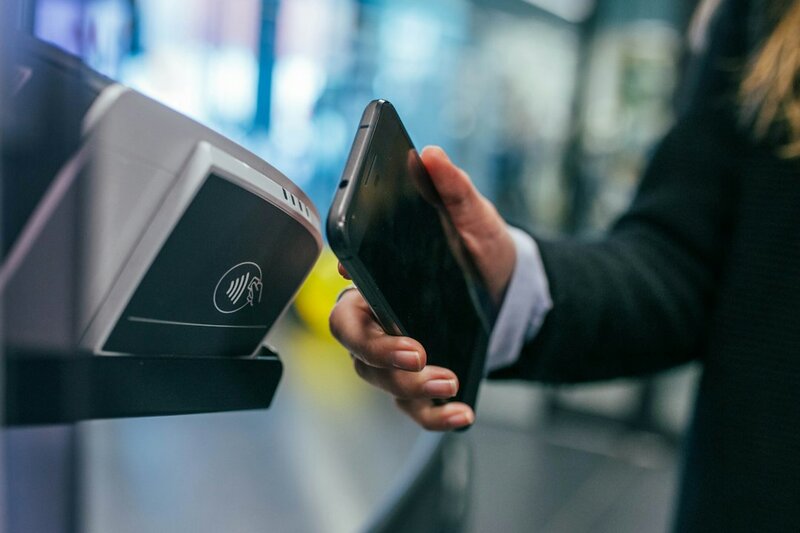
📷 Photo by Jonas Leupe on Unsplash