
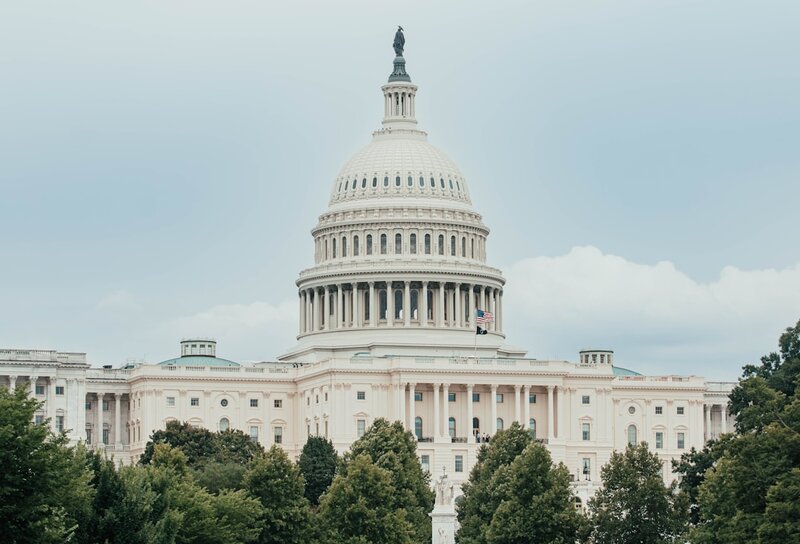

The US Senate just voted 85 to 5 to ban the Federal Reserve from issuing a central bank digital currency until the end of 2030. Not a close vote. Not a partisan split. An overwhelming, bipartisan consensus that the future of digital money belongs to private crypto infrastructure, not a government-controlled digital dollar.
And on-chain gaming was already built on that exact assumption.
TL;DR
- The US Senate voted 85-5 to ban a Federal Reserve CBDC until 2030, embedded in the 21st Century ROAD to Housing Act
- This is the strongest institutional endorsement of private blockchain infrastructure ever, coming from the US government itself
- Private stablecoins and on-chain protocols are now the officially preferred digital dollar infrastructure
- On-chain gaming platforms like Satoshie, built entirely on private blockchain rails, just had their architecture validated by the world’s largest economy
- A CBDC would have created a surveillance-compatible payments layer. On-chain gaming needs permissionless infrastructure to function
What the Senate Actually Did
The ban was tucked inside the 21st Century ROAD to Housing Act, which passed with one of the widest bipartisan margins on any crypto-adjacent legislation in history. The provision prohibits the Fed from “directly or indirectly issuing or creating a central bank digital currency or any digital asset substantially similar to a CBDC” through 31 December 2030.
This was not reactive. The Fed had no active CBDC programme. There was no digital dollar about to launch. The Senate voted preemptively to lock the door, making a structural decision about who controls dollar-denominated digital infrastructure for the next four years.
The answer: not the government. The private sector. Blockchain protocols. Stablecoins. The exact infrastructure that on-chain gaming already runs on.
Why This Matters More Than Any ETF Approval
Bitcoin ETFs got the headlines. Tokenised securities got the hype cycles. But an 85-5 Senate vote telling the Federal Reserve to stay out of digital currency infrastructure? That is a different category of validation entirely.
ETF approvals say Wall Street is allowed to wrap crypto in familiar packaging. A CBDC ban says the US government has decided, with near-unanimity, that private blockchain infrastructure is the preferred architecture for digital value transfer.
Every on-chain protocol benefits from this. But on-chain gaming benefits more than most, because gaming requires something that a CBDC could never provide: permissionless participation.
A government-controlled digital dollar would have come with KYC requirements, transaction monitoring, and programmable spending restrictions baked into the currency itself. Imagine trying to enter a provably fair raffle where the currency you are using can be frozen, flagged, or restricted by the issuer in real time. That is not gaming. That is a permission slip.
The Stablecoin Windfall
With a federal digital dollar off the table until at least 2031, private stablecoins are now the undisputed infrastructure for dollar-denominated on-chain activity. The CLARITY Act, still working its way through Congress, would formalise the regulatory framework around these private stablecoins. Together, these two pieces of legislation create the clearest runway private crypto infrastructure has ever had.
For on-chain gaming, this is foundational. Satoshie’s raffles and coinflip games settle in crypto on Base, an Ethereum Layer 2. The stability and legitimacy of the stablecoin ecosystem directly determines how accessible on-chain gaming becomes for mainstream users. When the US Senate says “private stablecoins are the future,” it is saying “the infrastructure on-chain gaming already uses is the right bet.”
The Surveillance Question Nobody Is Asking
Every CBDC proposal globally has included some form of transaction surveillance. China’s digital yuan tracks spending categories. The European Central Bank’s digital euro prototype includes holding limits and programmable restrictions. A US CBDC would have been no different.
On-chain gaming requires the opposite architecture. Provably fair games need verifiable randomness, transparent smart contracts, and permissionless entry. You cannot build a provably fair raffle on infrastructure designed to monitor and restrict transactions. The two design goals are fundamentally incompatible.
By killing the CBDC, the Senate inadvertently chose the architecture that makes provably fair gaming possible. Not because they were thinking about gaming. Because permissionless infrastructure is better for everything.
What Satoshie Already Knew
Satoshie was built on the assumption that private blockchain infrastructure would win. Every design decision, from Chainlink VRF for verifiable randomness, to Base for fast and cheap settlement, to smart contracts with no admin keys, assumed a world where permissionless protocols, not government-issued digital currencies, would be the foundation layer.
The Senate just confirmed that assumption with an 85-5 vote.
There was never a version of on-chain gaming that worked on a CBDC. There was never a provably fair raffle that could function on surveillance-compatible money. The entire premise of trustless gaming, that nobody, not even the platform, can manipulate outcomes, requires infrastructure that no government would willingly build.
Private crypto infrastructure is not just preferred now. It is the only game in town. And on-chain gaming was already there.
The Irony Nobody Is Talking About
Here is the part that should make every crypto gaming platform uncomfortable: the US government just validated the infrastructure layer, but most crypto games still are not using it properly. They are still running server-side random number generators. Still using centralised backends. Still asking users to trust the platform rather than verify the outcome.
The Senate killed the digital dollar because it trusted private blockchain infrastructure more than government-controlled alternatives. If the US government trusts blockchain, why do most crypto games still not?
Satoshie uses Chainlink VRF because verifiable randomness is the entire point. Every raffle, every coinflip, every outcome is provably fair and verifiable on-chain. That is not a feature. It is the minimum standard for any platform that claims to be built on the infrastructure the US Senate just endorsed.
The CBDC is dead. Private crypto infrastructure won. Now the question is simple: are you building on it properly, or just pretending?
📷 Photo by Connor Gan on Unsplash