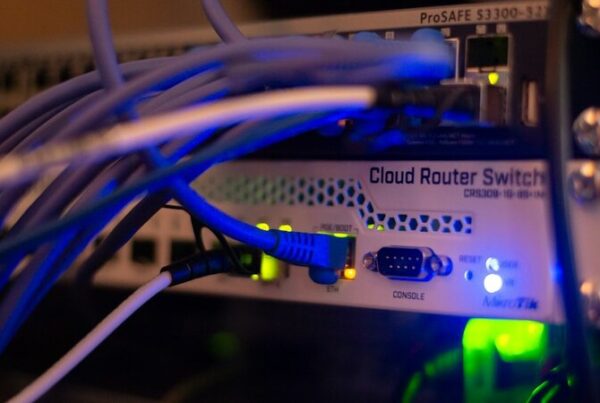

Wells Fargo joined JPMorgan and Citi this week in the race to tokenise Wall Street’s settlement rails. The detail buried in the reporting is the whole story: payments will run on the bank’s own proprietary blockchain, routed automatically through its existing client interface. Every headline says blockchain. Almost nobody asks the only question that actually separates one ledger from another, which is who besides the bank is allowed to read it.
TL;DR
- Wells Fargo is following JPMorgan and Citi into tokenised settlement, running payments on a proprietary blockchain routed through its own client interface.
- “Blockchain” bundles three separable properties: a shared data structure, consensus over who may write, and permissionless public reading. Permissioned bank chains keep the first, restrict the second, and drop the third entirely.
- For a regulated bank that trade is defensible, because its accountability was never cryptographic. It is legal: regulators, auditors, contracts, courts.
- Crypto gaming makes the identical trade with none of that apparatus, and calls the result provably fair. A studio that runs its own chain also runs the sequencer, the RPC endpoint and the block explorer, which means “verify on chain” collapses into asking the operator again, more prettily.
- The test is not whether a game is on a blockchain. It is whether you can check your result from infrastructure the operator does not run.
Blockchain is three things, and only one of them is being sold
Strip the word back to its parts. A blockchain gives you a shared append-only data structure, a rule for who is permitted to write to it, and the ability for anyone at all to read it without asking. Those properties are independent. You can have the first two without the third and the machinery still works perfectly well.
That is exactly what a proprietary bank chain is. Wells Fargo gets deterministic settlement, programmable payments and an immutable internal audit trail. What it does not offer, and was never designed to offer, is a stranger being able to query the ledger. The write set is a closed club. The read set is the same club. The efficiency is real and the verifiability is absent, and those two facts are not in tension because verifiability was never the product.
For a bank, this is honest. Genuinely.
Here is where the crypto reflex to sneer gets it wrong. Wells Fargo is not claiming you can verify anything. Its accountability model has never been cryptographic and it does not pretend otherwise. It is a supervised institution with capital requirements, external auditors, contractual obligations to counterparties, and courts that will hear you if it fails to honour them. Its clients are institutions with legal teams and recourse. Nobody in that arrangement needed a public ledger, because the trust question was already answered by an entirely different apparatus.
Swapping cryptographic verification for legal accountability is a legitimate design choice when you have the legal accountability. The bank has it. That is the part crypto gaming keeps forgetting to bring.
The same trade, minus everything that made it work
Now run the identical architecture through a gaming studio. A project launches its own chain, or an app-specific rollup, because it wants throughput, cheap transactions and control over the user experience. It markets itself as on-chain. It publishes a block explorer. It is, in every literal sense, running a blockchain.
It is also running the sequencer, which means it decides transaction ordering, which is the exact lever we have written about before as the second half of fairness. It runs the only RPC endpoint anyone uses, so every query about your result is a query answered by the counterparty to your bet. It operates the explorer, so the page you were told to check is a view the operator renders over a database it controls. The chain is real. The independence is theatre.
And unlike Wells Fargo, there is no regulator, no statutory auditor, no contract, and no court that will take your call about a coinflip. The cryptographic guarantee was given up, and nothing replaced it. That is not a permissioned ledger, it is a database wearing a blockchain costume, and the costume is doing serious marketing work.
This is the same disease we described in the presence versus invocation problem, one floor up. There, a real randomness component existed in the codebase while sitting off the execution path. Here, a real blockchain exists while sitting off the verification path. In both cases the honest component is present, functional, and completely unable to help you.
What actually has to be true
The property that makes a result checkable has nothing to do with the word blockchain and everything to do with plurality of readers. Can you get the same answer from infrastructure the operator does not run? If yes, the operator’s cooperation is optional and its honesty is testable. If no, you are back to trusting a company, and you have paid gas fees for the privilege.
Satoshie runs on Base, an established Ethereum layer two. Games resolve inside a Chainlink VRF callback, with the coordinator verifying the randomness proof on chain before the callback can execute. The coinflip is a single modulo over the returned word. The raffle is keccak256 of the VRF word combined with a prior blockhash, modulo tickets minted. Stake escrow and payout happen in the same transaction that computes the outcome.
The honest caveat, because we would rather say it than have it said to us: Base has a centralised sequencer operated by Coinbase, so ordering is not decentralised today. The difference from a studio chain is structural rather than rhetorical. Base posts its data to Ethereum mainnet, so the state is reconstructable from a chain Coinbase does not run. There are many independent RPC providers and multiple block explorers, none of which Satoshie operates or can influence. Ethereum’s forced inclusion path exists as a backstop. We are not the only party who can read our own ledger, and we could not become that party even if we wanted to.
That is the narrow claim, and it is the only one worth making. Not that the infrastructure is perfect, but that we are not the ones auditing ourselves.
Three questions
- If the game runs on its own chain, who operates the sequencer, and does anyone else produce blocks?
- Can you query your last result from an RPC endpoint or block explorer the platform does not run, and does the answer match what the platform showed you?
- If the studio shut down tomorrow, would the ledger still exist somewhere it does not control?
Wells Fargo can answer no to all three and still be a perfectly trustworthy counterparty, because banking solved its trust problem with law a very long time ago. Crypto gaming cannot borrow that answer. It has exactly one mechanism available, which is letting you check for yourself, and any architecture that quietly removes your ability to do so has removed the only thing blockchain was bringing to the table.
📷 Photo by David Trinks on Unsplash