
The Office of the Comptroller of the Currency handed OpenReserve Bank preliminary conditional approval for a de novo national bank charter in a letter dated Wednesday 2 September 2026. The Salt Lake City startup, founded last year by Diwakar Choubey and Richard Correia on a $25m seed round led by a16z crypto, plans deposits and lending, payments, treasury services, digital asset custody and tokenised deposit products off a programmable core ledger, with a stablecoin subsidiary sketched but not yet applied for.
The detail everyone picked up was the charter type. Coinbase, Circle, Ripple, Paxos and BitGo have all gone for national trust charters, which permit custody and fiduciary work and forbid deposit-taking and lending. OpenReserve went for the full thing. The headlines summarised that as a path to insured deposits, and they are right that it is one. What almost nobody said out loud is what insurance is actually for.
TL;DR
- OpenReserve secured preliminary conditional OCC approval on 2 September 2026 for a full national bank charter, not the trust route taken by Coinbase, Circle, Ripple, Paxos and BitGo.
- The conditions are substantial: $210m minimum paid-in capital, a 12% tier 1 leverage ratio for three years, until September 2027 to raise it and March 2028 to open.
- FDIC deposit insurance is a separate approval that must be obtained before the bank can operate. “Insured deposits” is a claim about 2028, conditional on two more regulators.
- Deposit insurance covers an institution failing. It has never covered an institution working exactly as designed against your interest, which is the failure mode this series has spent forty-seven instalments documenting.
- Satoshie carries no insurance either, and says so. It removes the discretion instead: ticket price fixed in the deployed contract, odds published before a ticket is sold, Chainlink VRF proof verified on-chain before the payout callback runs.
What the charter actually buys
Read the conditions rather than the headline. OpenReserve must raise at least $210m in initial paid-in capital and hold a tier 1 leverage ratio of 12% for three years, with until September 2027 to find the money and until March 2028 to open. FDIC deposit insurance is a separate application and is required before it can operate at all. So is Federal Reserve Bank stock.
None of that is a criticism. The bar being high is the entire point of chartering. But notice what the OCC verified: a capital structure, a business plan and a timeline. It did not verify a product, because there is not one yet. The thing approved is a promise about 2028, and it reaches you and me as a conclusion rather than as something we could check.
Insurance covers failure. It has never covered design.
Here is the forty-eighth unasked half of fairness, and it is the simplest one yet. Deposit insurance is a promise about what happens when a bank fails. The institution collapses, the fund steps in, you are made whole up to a ceiling. It is a backstop against the counterparty ceasing to exist. It is not, and never has been, a promise about what happens while the counterparty is alive and operating exactly as intended.
Go back through this series and count the losses. The freeze that arrived before the warrant. The exit nobody chose, when a mark price nobody could recompute liquidated a position. The prize nobody escrowed. The pause button with a longer reach than anyone realised. The repayment at a ratio nobody agreed to. The price nobody published, quoted on an FX desk where two clients ask the same question in the same second and get different numbers. Not one is an insurable event. In every single case the institution was solvent, licensed, operating and correct by its own terms. Nobody failed. That is precisely why nothing paid out.
Insurance answers “what if they go under”. Fairness answers “what if they do not”. Different questions, and the industry has spent a decade letting the first stand in for the second because the first comes with a logo you can put in your footer.
Then there is the ceiling. Every insurance scheme is a number, set by somebody, for somebody, in a year that is not this one. A guarantee with a limit is a guarantee about a typical customer. Verifiability has no cap, because it is not paying anything out. It is telling you what happened.
Giving it its due, properly
Deposit insurance is arguably the most successful piece of consumer protection anyone built in the twentieth century, and crypto should be less smug about it than it is. A bank run is a coordination failure, not a solvency failure: a perfectly healthy bank dies if enough people queue on the same morning, and no amount of good lending prevents it. Insurance solves that by making the queue pointless. Nothing in a smart contract does that job, and this industry has produced a long and expensive list of what the absence looks like.
OpenReserve also picked the harder road on purpose. A trust charter is narrower, faster and comes with less supervision. Choosing deposit-taking and lending means choosing capital requirements, examiners and a leverage ratio somebody checks. That is more accountability than most of the sector has volunteered for.
What we do instead, stated narrowly
Satoshie does not insure anything. It removes the discretion that insurance was never going to cover.
The ticket price is a constant in the deployed contract, not a setting on a dashboard. The odds are a function of the entry count, published before a ticket is sold. The Chainlink VRF proof is verified on-chain before the callback that pays the winner runs, so no outcome is provisional while its proof is in the post. On the coinflip the escrow, the callback and the payout are one transaction, so there is no window in which a human sees the result and decides anything about it. No admin key reaches a live draw.
The consequence is not that you are protected. It is that in that specific list there is nothing to be protected from, because the discretionary decision does not exist in the code path. You are not trusting us not to use a power. We do not have it. A stranger with an explorer and the public VRF verification can recompute the draw without our cooperation, today or in 2030.
The honest limit, and it is a big one
We have no insurance at all. None. If the contract has a bug, if you sign a transaction you should not have signed, if an RPC endpoint you trusted served you a lie, there is no fund, no ceiling, no claims process and no appeal. A depositor at a failed insured bank typically gets paid within days. A player hit by a contract exploit gets a post-mortem and a link to a block explorer.
So be clear about the trade. Insurance covers the failure mode we cannot eliminate, code being wrong, and we do not have it. We eliminate the failure mode insurance was never going to cover, discretion being exercised. That is a swap, not a victory lap, and anybody in on-chain gaming who tells you otherwise is selling.
Second limit, and it is the twenty-fifth instalment again: an audit is not insurance either. An audit is a report about a moment. A verifiable proof is a permission to check, not the act of checking, and almost nobody checks.
Three questions
- When your venue says “protected”, is it protecting you from the venue failing, or from the venue succeeding at your expense? Only one of those is usually on offer.
- What is the ceiling on the protection, who set it, and in what year?
- Take a real loss you have taken, in crypto or in banking. Would insurance have paid, or was the system working exactly as designed?
OpenReserve will probably be a good bank. But a charter is a statement about who may hold your money and what happens if they stop existing. It says nothing whatsoever about whether the number you were given was the number you were owed. That question has an answer now, and it is not underwritten by anybody. It is just published.
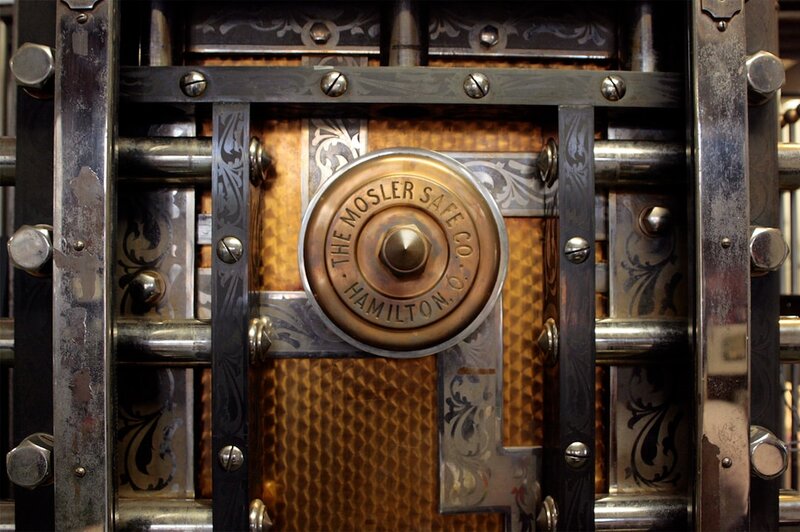
📷 Photo by David Trinks on Unsplash