

CoinDesk reported on 5 September that the XRP Ledger is carrying more value across fewer hands. Daily order-book traders are down roughly 40% from a year ago. Volume is up 79%. The value held on the ledger has pushed above $4bn. Every one of those numbers is good news for somebody, and it is not the same somebody in each case.
Nothing here is a scandal. A venue trading more value through fewer accounts is, by most institutional measures, maturing rather than dying. That reading is legitimate. But it exposes something the fairness debate in crypto gaming has never addressed, and this series has spent forty-eight instalments not addressing it either.
TL;DR
- XRPL daily order-book traders fell about 40% year on year while volume rose 79% and value held on the ledger passed $4bn (CoinDesk, 5 September 2026).
- Fairness is a property of a game that happens. Liquidity is the condition under which a game happens at all, and no cryptographic proof creates one.
- Chainlink VRF certifies that a draw was uniform and uninfluenced. It is silent on whether there will be a draw.
- A coinflip needs a counterparty and a raffle needs entrants. Participation is the one input a chain cannot manufacture.
- The industry cure for thin books is house-funded participation, and a house entry is indistinguishable on-chain from a player entry.
- Satoshie’s honest limit: we can prove the draw was fair. We cannot promise there is a draw.
The forty-ninth unasked half of fairness
The previous instalment, on the OCC’s conditional charter approval for OpenReserve, drew a line between insurance and fairness: insurance is a claim about what happens when a system fails, fairness is a claim about what happens when it works. That line has a third side nobody stands on. Absence is neither. A game that never fills has not failed and has not been unfair. It did not occur, and no proof, audit or backstop in this industry addresses the case where the honest machine runs perfectly with nobody in front of it.
That is the forty-ninth unasked half: THE GAME NOBODY FILLED.
What the XRPL numbers actually say
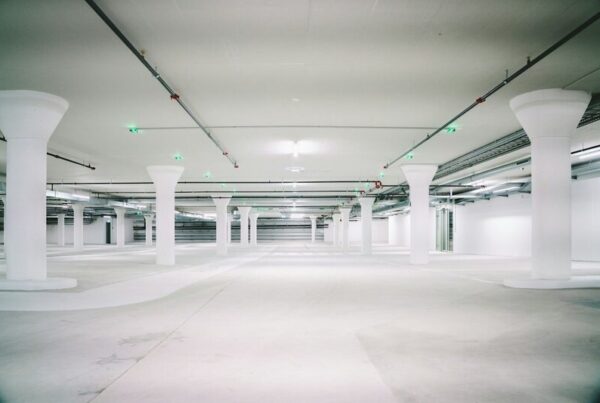
Read the three figures as one sentence and they say: the same economic activity is now produced by a much smaller number of decisions. That is not a rounding difference, it is a structural change in who is at the venue. The dashboards go up. The room empties.
For a large participant that is fine and possibly preferable, because depth is a function of capital present, not headcount. For a small participant it is the opposite: getting filled at a sane price depends on someone being on the other side who is not enormous, patient and better informed than you. Both are looking at identical published, verifiable, uncontested numbers and correctly reaching opposite conclusions about the health of the venue. That is not an information problem, and transparency does not touch it.
The load-bearing distinction
Every proof this series has argued for is conditional on a game existing. The conditional has been invisible because it has never once failed in an example. Go back through the catalogue: the prize nobody escrowed, the price nobody published, the exit nobody chose, the loss nobody insures. In every case something was happening and the question was whether it was honest. Not one asks whether it would happen.
Verification is a function that takes an event and returns true or false. It is undefined on the empty set. A fair game with no players is not a small amount of fairness, it is zero of anything: the expected value of a raffle that never sold enough tickets to draw is nil, and the VRF proof that would have run is not a consolation.
This is why availability sits outside everything cryptography does. Randomness can be made unmanipulable, payouts unstoppable, custody keyless. Participation cannot be made anything, because participation is other people, and other people are not a protocol parameter.
Where this bites in on-chain gaming
A coinflip needs a counterparty. Satoshie’s coinflip escrows both sides and settles the payout in the same transaction as the VRF callback, which removes the operator’s discretion entirely. It does not remove the requirement that a second person shows up. An escrow with one participant is a wallet.
A raffle needs entrants. This one is subtler, because a raffle with three tickets sold is still perfectly fair. The odds are published in the contract before sale, the ticket price is constant, the list is enumerable, and the VRF proof is verified before the callback pays. Every one of those properties holds at three tickets exactly as it holds at three thousand. The mechanism is untouched. What collapses is whether the prize is worth the ticket, and that is a question about the crowd, not the code.
Be precise, because it is easy to overclaim: thin participation does not make a Satoshie raffle unfair. It makes it uninteresting, which is a different problem. Nobody was cheated. There was just nothing worth turning up for.
The cure that reintroduces the disease
The standard answer to a thin book is to fill it yourself. Seed the pot. Enter with house funds so the raffle reaches its draw threshold. In market making that is a legitimate, well understood function.
In a game it is poison, and here is the uncomfortable part: a house entry and a player entry are the same object on-chain. Same call, same ticket price, same event log. You cannot tell them apart by looking, and neither can I. This series has already conceded that Satoshie cannot prove the addresses in a raffle belong to distinct humans, and that no platform can. House seeding is that limitation weaponised by the operator rather than merely tolerated.
What you can check before entering is whether the operator could do it for free. Is the prize derived from tickets actually sold, or decided before entries opened? Does minting a ticket require payment in the same transaction, or is there a mint path that skips the till? Is the ticket count contract state, or a dashboard figure? Those questions do not tell you whether the house is in the raffle. They tell you whether it can be in without paying, which is the version that costs you.
What Satoshie will not promise
We have no liquidity guarantee. None. No market maker of last resort, no house float committed to filling coinflips, no minimum-entrants backstop. We eliminated operator discretion over outcomes. We did not eliminate the need for a room with people in it, and anyone claiming to have solved that with a smart contract has either not thought about it or is seeding their own pots.
The trade is the one this series keeps arriving at. Provable fairness removes the failure modes that come from someone deciding. It does nothing about the ones that come from nobody arriving. Those are not the same risk, and a platform loud about the first and quiet about the second is telling you half of something.
The XRP Ledger is not in trouble. It is a venue getting deeper and emptier at once, publishing every number honestly and leaving the reader to work out which fact applies to them. That is roughly the most honest thing a venue can do. The next best thing is saying it out loud first.
Satoshie runs provably fair raffles and coinflips on-chain, with odds published in the contract, Chainlink VRF randomness verified before payout, and no admin key. What we can prove, we prove. What we cannot, we tell you.
📷 Photo by Vienna Reyes on Unsplash